
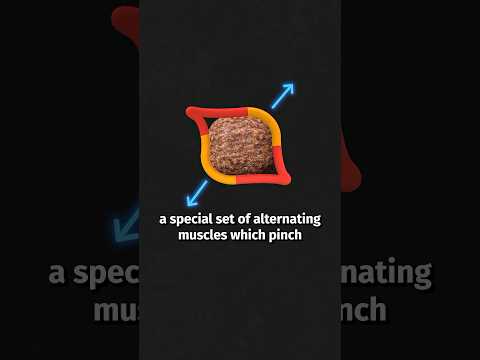
- Wombat digestive anatomy incorporates specialized muscles that pinch and pull fecal material into angular shapes.
- The cubic form is an indirect result of survival-driven water extraction from dry, fibrous food sources.
- The byproduct of these processes happens approximately 100 times daily, creating significant environmental impact over short timeframes.
Channel: Veritasium
Wombats Poop Cubes
This video details the biological mechanics behind the evolutionary development of cubic-shaped feces in wombats. It connects environmental water scarcity to specialized digestive tract muscle contractions.
Key Takeaways
- Cubic feces are a functional byproduct of extreme water extraction mechanisms in the wombat gut rather than a trait for scent-marking efficiency.
- Specialized gut muscles use alternating contractions, similar to tension-based material shaping, to compress waste into square forms during a two-week digestion cycle.
Talking Points
Analysis
Biological Efficiency
This explanation offers a fascinating look at evolutionary 'byproducts' where a structural outcome (cubic shape) is optimized for one purpose (territorial marking) while originating from a completely disparate biological necessity (water retention).
Who should care: Biologists and materials scientists interested in non-linear shape formation via internal structural stress.
Contrarian Takeaway: The shape is not an adaptation for the environment, but a direct artifact of internal dehydration-resistant plumbing. Often, extreme 'purposeful' designs in nature are merely unavoidable consequences of physiological survival imperatives rather than direct evolutionary intent.
Channel: Veritasium