This tiny magnetic blob could change how we treat brain tumors forever...
This tiny magnetic blob could change how we treat brain tumors forever...
Can magnets kill tumors?
Can magnets kill tumors?

How mathematicians broke a wall.
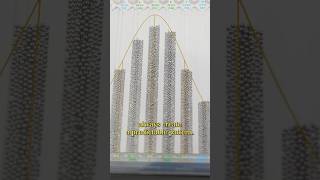
The physics behind stock market risks

Is your charger wasting energy?

Satellite jamming or space-comm test?
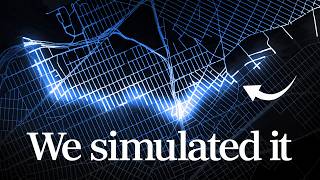
The hidden math behind fast maps.

Infinite hotels and logic gaps.

Your password is leaking time.

Your body has a 30-battery appetite.
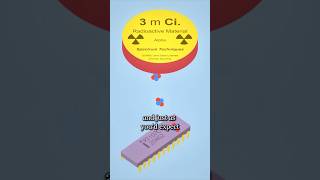
Invisible radiation broke 70s PCs.
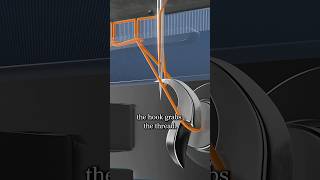
The 170-year-old secret of sewing

Is remote heartbeat tracking a myth?

Why your medicine might turn into sugar.
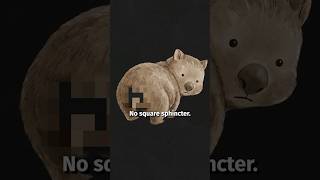
The biology behind square waste.

How crushed rocks save train tracks
Bananas, smoking, and your next flight.


Vehicles in contact with two different moving media can achieve speeds greater than the relative velocity between those media.
The phenomenon relies on a mechanical gear system, similar to the Blackbird project, rather than standard aerodynamic lift or drag principles.

Physicists at CERN use a specialized facility to produce and trap antimatter, trying to understand why normal matter dominates the universe.
The disparity between matter and antimatter suggests that the Standard Model is incomplete, prompting researchers to look for subtle physical differences between the two.
Experiments like GBAR and Alpha G are working to measure how gravity affects antimatter to see if it behaves differently than normal matter.
Despite popular science fiction tropes, antimatter is incredibly difficult to produce and store, making the prospect of it being used for weapons or energy fundamentally impossible at scale.
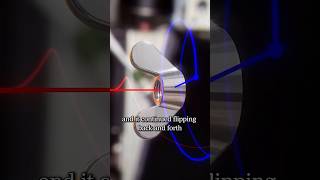
The Dzhanibekov effect, also known as the intermediate axis theorem, causes rotating objects to spontaneously flip orientation periodically in weightless environments.
The phenomenon was famously discovered by cosmonaut Vladimir Dzhanibekov while working on the Salyut 7 space station in 1985 and was initially kept classified for a decade.