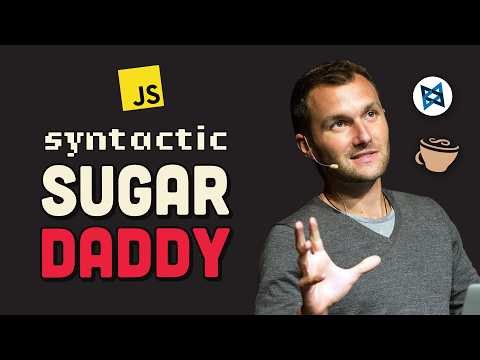
The forgotten developer who saved JavaScript...

Video thumbnail: The forgotten developer who saved JavaScript...
May 29, 20266m 29s video lengthFireship

The Signal

This video profiles Jeremy Ashkenas, the developer behind Underscore.js, CoffeeScript, and Backbone.js, arguing he was the most pivotal—and under-credited—force in rehabilitating JavaScript’s reputation during the 2010s. The narrator frames his work not just as code, but as a systematic campaign to solve the era’s three primary bottlenecks: missing utility functions, awkward syntax, and a total lack of application structure. While the video presents an Ashkenas-centric history, it remains an asserted narrative rather than a comparative audit of the many other contributors to the modern web.

The Case

  • JavaScript in 2009 was notoriously difficult for large applications, lacking a standard library, classes, and clean scoping, which forced developers to rely on volatile, browser-dependent polyfills.0:31
  • Underscore.js, an early "utility belt," addressed basic language gaps with 60 helper functions, effectively proving the need for missing functionality now standard in modern JavaScript.1:56
  • CoffeeScript offered a syntax-level fix through a compile-to-JS model, achieving massive adoption when integrated as the default preprocessor in Rails 3.1, a web framework popularized by Basecamp developer DHH.3:24
  • Many modern JavaScript features, including arrow functions, classes, and destructuring, were direct responses to patterns popularized by CoffeeScript, though the causal chain remains the narrator's interpretation.3:52
  • Backbone.js provided a lightweight MVC framework of fewer than 2,000 lines of code, serving as the bridge to structured client-side development for early-stage companies like Trello, Airbnb, and Pinterest.4:24
  • The sponsor, Clerk CLI, claims to automate end-to-end authentication setup and framework migrations, though these claims appear as self-serving promotional material lacking independent verification.5:39

The 1 Minute Signal Take

This is a concise, high-signal history lesson that hits its mark by linking specific tools to the exact pain points they solved. Because the narrator relies on anecdotal evidence and personal opinion to claim Ashkenas’s supremacy, skip this if you want a rigorous academic chronicle, but watch it for the efficient distillation of how front-end development evolved across the early 2010s.

Pro Analysis

Strategic Significance:

This content highlights the role of 'bridge technologies'—tools that serve as temporary scaffolding to evolve an...

Full analysis always available on Pro.

Time saved:4m 46s

Share this

Tags