I can’t believe this trial is real...
Musk loses, OpenAI grows.

Musk loses, OpenAI grows.

Major CI Hack Exploits Trust

Unlock how your computer actually works

AI just found a massive Linux bug.

AI agents are breaking GitHub.
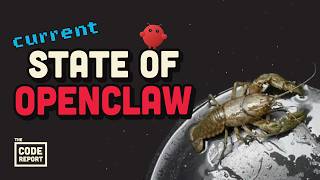
Building autonomous AI agents at home.
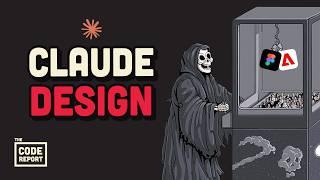
Does Claude Design kill UI jobs?



Google has released Gemma 4, an Apache 2.0 licensed model that enables high-level intelligence on consumer hardware.
The model's efficiency stems from architectural innovations like 'effective parameters' rather than traditional, lossy quantization.
Gemma 4 outperforms similar-sized models and competes with significantly larger proprietary models, making it a viable option for local deployment and fine-tuning.

Cursor 3.0 marks a strategic pivot away from code-writing toward managing distributed AI agent swarms across multiple environments.
The new Composer 2 model, while performant, faced controversy for being a rebranded version of Moonshot's Kimmy K2 model.
The platform has been rewritten in Rust to support a more complex interface capable of handling multiple concurrent agent tasks.

Pretext significantly improves interface performance by bypassing browser-native text measurement that causes costly layout reflows.
The library uses the Canvas API to calculate pixel widths and a custom algorithmic approach for line height, overcoming traditional web development limitations.
This technology enables highly efficient virtualized lists, masonry layouts, and creative UI effects without compromising performance.

Anthropic inadvertently exposed its entire Claude Code source code by including development-only source maps in a public NPM package.
The leaked code reveals that Claude Code relies on complex prompt engineering and hard-coded guardrails rather than revolutionary new AI technology.
Developers quickly leveraged the leak to create forks, highlighting the vulnerability of closed-source AI tools when build processes fail.

Two malicious versions of the widely used Axios package were published to npm, facilitating a supply chain attack.
The exploit used a rogue dependency to trigger a post-install script that executes a remote access Trojan (RAT) on the developer's machine.
The malicious script purposefully erases its own tracks, making standard security audits fail to detect the compromise.
Affected users are advised to rotate all API keys and credentials immediately, as simple package removal is insufficient for remediation.

Anthropic has released a powerful tool that allows Claude to autonomously interact with desktop applications, bridging the gap between LLM reasoning and physical task execution.
The rise of autonomous agents creates significant ethical and professional concerns regarding the obsolescence of entry-level knowledge work in legal and financial sectors.
Developers now face a choice between closed-source, polished solutions like Anthropic’s Computer Use and open-source alternatives that offer more control but require greater technical expertise to operate safely.

The US military is deploying the Maven Smart System, an AI-powered platform designed to enhance target identification and accelerate the tactical decision-making process.
The technical backbone involves data ingestion via stream processing, an 'ontology' layer for contextual mapping, and graph databases to track dynamic battlefields.
Partnerships with private firms like Palantir, Anduril, and OpenAI highlight the deepening reliance of national defense infrastructure on commercial hyperscalers and AI developers.
While humans retain executive control, the architecture is designed to progressively automate sensor fusion, threat prioritization, and kinetic responses.

California's new legislation mandates that general-purpose operating systems must perform age verification, threatening user anonymity at the kernel level.
The move is framed as child safety but functions as a potential surveillance mechanism requiring authentication for device access.
A new initiative called Ageless Linux provides a workaround script for Linux distributions to resist these compliance requirements.


Shift away from manual coding: Traditional hand-crafted programming is being replaced by managing AI agent teams to accelerate product development.
Essential toolkits: Developers can utilize specialized open-source tools to handle agent orchestration, prompt testing, automated design, and refined memory management.
Controlling model behavior: Options exist for both enforcing strict safety within agent workflows and removing guardrails for unfiltered model customization.
Streamlining infrastructure: Managing complex integrations like meeting platforms can be simplified using unified APIs, significantly reducing production time.