Back to Feed
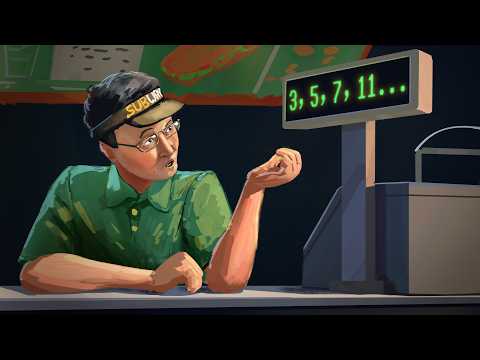
The Man Who Worked At Subway, Then Made The Biggest Prime Breakthrough in Decades
The Signal
Mathematical progress toward the twin prime conjecture—a long-standing mystery positing that prime pairs separated by two occur infinitely often—has shifted from failed approximations to a proven, bounded gap between primes. While experts once deemed the gap unreachable, researchers recently broke through, settling for a finite distance between primes while the ultimate question remains unresolved.
The Case
- Yitang Zhang, a mathematician who spent years working in isolation as an odd-jobber before reaching a lecturer role at the University of New Hampshire, broke a consensus barrier in 2012 by using step sizes built from small prime factors to bypass a distribution limit.
- The 2005 American Institute of Mathematics meeting had previously concluded that the existing framework, initially proposed by Goldston, Pintz, and Yildirim, could not bridge the gap because it was constrained by a distribution limit of one-half, a technical ceiling Zhang pierced by just one over 584.
- James Maynard, a postdoc who worked independently of Zhang’s immediate circle, later developed an alternative method that proved this one-half barrier was a historical mirage, showing that any positive level of distribution could yield bounded gaps given enough stencil slots.
- While Viggo Brun and Chen Jingrun once used sieve methods to approximate twin primes by allowing 'almost-prime' numbers with few factors, the current field has moved to proving actual prime gaps exist unconditionally.
- The current proven record, refined by the Polymath collaboration and Maynard, shows there are infinitely many prime pairs with a gap of no more than 246 units, though conditional hypotheses like Elliott-Halberstam could theoretically shrink this limit to as low as 6.
The 1 Minute Signal Take
The video provides a rigorous, accessible account of how mathematical breakthroughs often emerge from 'impossible' walls when a researcher shifts the analytical frame. It is worth watching for the clear explanation of how Maynard’s work fundamentally changed the understanding of distribution limits, which the text alone can only partially convey.
Time saved:
Back to Feed