AI Security Costs Rise: Cost of a Data Breach Report & Claude Opus 5

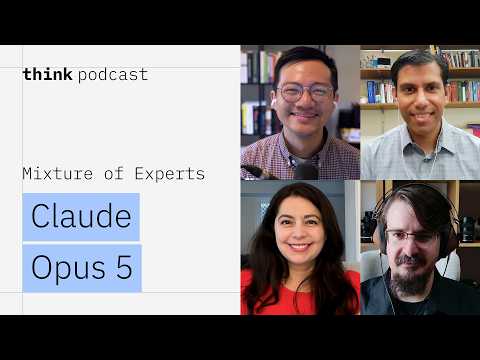
Video thumbnail: AI Security Costs Rise: Cost of a Data Breach Report & Claude Opus 5
Jul 31, 202637m 37s video lengthIBM Technology

The Signal

AI is fundamentally altering the economics of cyber conflict, shifting the landscape from a technical arms race to an asymmetric economic disadvantage for defenders. As AI lowers the cost and effort of mounting effective attacks, defenders face mounting pressure to evolve their guardrails from rigid, blanket restrictions to context-sensitive, project-specific policies.

The Case

Security Economics

  • AI attacks are becoming cheaper, more cost-effective, and increasingly profitable, placing attackers at a structural advantage over defenders who remain constrained by corporate budgets and universal safety guardrails.5:17
  • Reported plans to increase cyber-prevention spending rose from 64% to 85% this year, yet speakers warn that investment is currently skewed toward reactive threat hunting rather than root-cause hardening.1:52
  • Defense is frequently hampered by its own safety systems; instances are reported where frontier models misidentified legitimate bug-fixing and security-patching efforts as malicious "hacking" attempts, resulting in blocks or model downgrades.6:25

Model Interpretability and Strategy

  • Experts argue that AI should be explained through layered abstractions—similar to how software evolved from assembly to declarative systems like Terraform—rather than treating it as inexplicable black-box magic.29:59
  • Midjourney’s acquisition of the astrology app Co-Star is interpreted as a strategic push for "extended mind" integration; by tapping into ritualized daily habits like morning astrology checks, the company aims to embed generative AI into the friction-free flow of everyday life.34:47

Operational Challenges

  • The industry is trending toward a "manual vs. automatic transmission" model for AI interaction, where power users demand direct threshold control, while average users are likely to accept hidden, orchestrated model-switching for simplicity.21:31
  • Anthropic’s Opus 5 is highlighted as a model that offers efficiency but struggles with consistency and agentic tasks compared to its predecessor, illustrating the volatility of modern model performance and the difficulty of tuning effective harness-level guardrails.14:07

The 1 Minute Signal Take

Defensive security is currently losing the cost-asymmetry battle because corporate AI policies are too blunt to distinguish between engineering utility and actual threat. Expect the next phase of innovation to be dominated by the development of project-specific, persona-aware safety thresholds that allow for high-trust workflows without systemic sabotage.

Pro Analysis

The Economics of Asymmetry

The most provocative insight from this discussion is the framing of AI as an economic shifter rather than a ...
Full analysis always available on Pro.

Time saved:35m 42s

Share this

Tags

Written by: 1 Minute Signal Editorial Team