
Channel: Marina Wyss - AI & Machine Learning
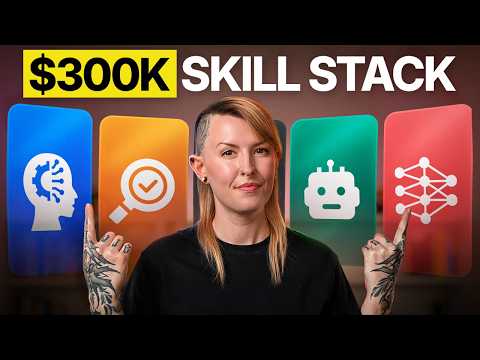
5 Skills That'll Make You a $300K AI Engineer in 2026
The Signal
To land a high-paying AI engineer role, the primary bottleneck is no longer prompt optimization but mastering production-grade reliability. The speaker reframes the AI engineer as a systems professional tasked with ensuring stability in non-deterministic environments. While foundational skills like prompt engineering and RAG are vital, the actual market differentiator is the ability to manage the full operational cycle of agents.
The Case
- Evaluation is the most overlooked and essential skill, as AI models fail in nuanced, subjective ways that conventional, manually verified code does not.
- Modern agentic systems—which take dozens or hundreds of autonomous steps—require sophisticated 'context engineering' that manages tool definitions, conversation history, and memory within a finite window.
- Production reliability mirrors distributed systems engineering, requiring developers to account for malformed API responses, network timeouts, and tool call failures.
- LLM ops serves as a necessary operational layer for products at scale, covering critical functions like latency tracking, cost optimization, and fallback handling for provider outages.
- Adaptability is treated as a career-critical competency because tools and model capabilities shift so rapidly that static learning paths often become obsolete within months.
- The speaker recommends a DataCamp 'Associate AI Engineer' track as a structured path, citing 26 interactive hours and a May 2026 content refresh, though this is a sponsored endorsement.
The 1 Minute Signal Take
The speaker provides a pragmatic, systems-level roadmap that correctly prioritizes reliability over mere prompt tuning, though the market claims—like specific 300K salary targets—lack independent evidence. Skip this if you are already comfortable with production-grade monitoring and operational patterns, but watch it if you need a clear, structured list of the infrastructure skills required to move from hobbyist chatbots to production systems.
Time saved:
Tags
Channel: Marina Wyss - AI & Machine Learning