Hands on: Fable 5 makes GPT 5.5 feel like a "toy"
Hands on: Fable 5 makes GPT 5.5 feel like a "toy"
Fable 5: Coding beast or hype?
Fable 5: Coding beast or hype?

The AI Summer: High-End Model News
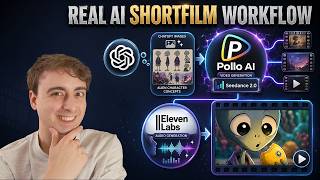
Can 1 person make an AI movie?

Music V2 vs Suno: Pick Your Winner

Flash vs. GPT-5.5: Who wins?

Google is betting everything on AI.
Artistic freedom returns with K2.

Voice AI showdown: Is it human yet?

AI agents are finally going autonomous

Is OpenAI's new model worth the price?

Advanced reasoning changes game dev.
Anthropic released Claude Opus 4.7 featuring enhanced vision capabilities and a new 'Claude Design' workspace for prototyping.
Despite new specialized modes like 'extra-high effort' execution, the model shows significant performance regressions in long-context retrieval tasks compared to its predecessor.
OpenAI introduced GPT-Rosalind, a specialized reasoning model tailored for scientific research, drug discovery, and biochemical analysis.
Google debuted a highly expressive text-to-speech model that allows for nuanced emotional control through prompted tags without relying on voice cloning.

OpenAI and Anthropic are both developing 'super-app' style interfaces designed to automate complex digital work through agentic capabilities.
The AI community is seeing a surge in powerful, uncensored local LLMs, exemplified by a highly capable fine-tuned SuperGemma 4 26B model.
New specialized models like Gemini Robotics 1.6 represent significant jumps in visual and spatial reasoning for physical-world intelligence.
Improved image generation models from OpenAI are showing extreme proficiency in creating text-accurate and photorealistic imagery compared to current industry standards.
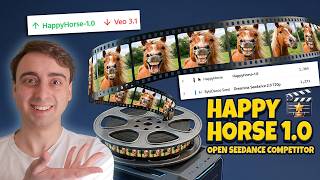
The new AI video model 'Happy Horse' has achieved a remarkably high ELO on the Artificial Analysis leaderboard, rivaling top closed-source competitors.
The AI industry is seeing a shift toward more accessible, high-fidelity video tools that include native audio integration and improved multi-shot consistency.
OpenAI's latest image generation model, currently being A/B tested within ChatGPT, demonstrates unparalleled proficiency in rendering complex text and UI elements within images.
The official release of the Dreamina SeaArt 2.0 model in the United States marks increased availability for top-tier generative tools, albeit with strict safety and content filters.


Suno AI released V5.5, though early testing suggests it may not offer a significant improvement over the existing V5 model in terms of audio quality.
Google's Lyria 3 provides clinical, precise audio but currently lacks the creative soul, natural flow, and rhythmic depth found in competitors.
Udio V3 stands out as a powerful, albeit technically complex, tool for users seeking to mimic specific artist styles and experiment with raw, unfiltered generative music.
Personalized voice cloning features in Suno show early promise but currently face consistency challenges, often failing to accurately replicate the user's authentic tone.
![Thumbnail for Everyone in AI Is Making Moves Right Now! [AI ROUNDUP]](https://img.youtube.com/vi/eIkCIBKf2BE/mqdefault.jpg)

OpenAI is deactivating the standalone Sora app to reallocate critical compute resources for more profitable, future-facing AI technologies.
The move signals a strategic pivot toward enterprise-level, business-to-business AI solutions rather than consumer-facing social media experiments.
Despite the app's closure, the training data harvested from user interactions remains highly valuable for refining future generative models.
OpenAI acknowledges the reputational risk of sunsetting an active product, but prioritizes long-term model efficiency over maintaining social novelty.