If you're building with AI, don’t miss this
If you're building with AI, don’t miss this
The new blueprint for AI networking
The new blueprint for AI networking

Scale your agency with AI automations

Why your AI agents keep failing.

Stop cold emailing. Start selling.

Scale your AI firm with retainers

The rapid pace of AI innovation creates unnecessary anxiety; prioritize clear business objectives over consuming the constant influx of AI news.
Algorithms are designed to prey on fear and FOMO; curate your information diet to include historical studies and foundational long-form content instead.
Establish an unfair advantage by niching down into a specific industry rather than chasing every new general-purpose development.
Transition from a generalist mindset to becoming a specialized AI transformation partner or building AI-first versions of traditional companies.
Practice gratitude and perspective, acknowledging that living through the AI singularity is an unprecedented historical privilege.


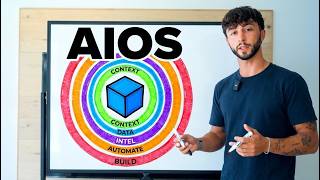
An AI Operating System (AIOS) is a business methodology, not a standalone model, acting as an intelligent, contextual layer around existing business operations.
By integrating context, data, and communication records, founders can achieve significant automation and augmentation, shifting focus from task-heavy maintenance to high-growth strategic initiatives.
Establishing a dedicated AI-native workspace allows for superior handling of complex, multi-functional business workflows compared to static, web-based chatbots.
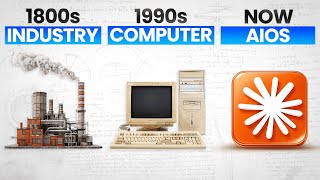
Shift your business management paradigm by implementing an integrated, layer-based AI Operating System (AIOS) rather than relying on fragmented, disjointed tools.
Free up significant founder bandwidth by automating recurring operational tasks, allowing you to focus on high-leverage strategic initiatives.
Drive compounding productivity gains by utilizing a contextualized AI system that understands your business strategy, team roles, and historical data.





Develop a centralized 'AIOS' to automate up to 70% of business tasks by layering intelligence over existing workflows.
Utilize Claude Code as a base engine to build modular tools that handle data analysis, meeting intelligence, and project management.
Implement a 'context-first' approach by creating a structured, local coding environment that serves as a single source of truth for your business data.
Shift operations into a terminal or mobile interface to enable remote business management without requiring a dedicated development team.