
- The 'dark store' warehouse model was adopted only after realizing that reliance on existing retail infrastructure prevented the control necessary for 10-minute delivery.
- Zepto’s transition from a marketplace to an owned, end-to-end supply chain was driven by a commitment to managing every link, from agricultural sourcing to the doorstep.
- AI and machine-learning algorithms replaced human teams for daily forecasting of millions of units, drastically increasing throughput and forecast accuracy.
- The company avoids high external software costs by prioritizing internal tool development and automation across all business functions.
Back to Feed
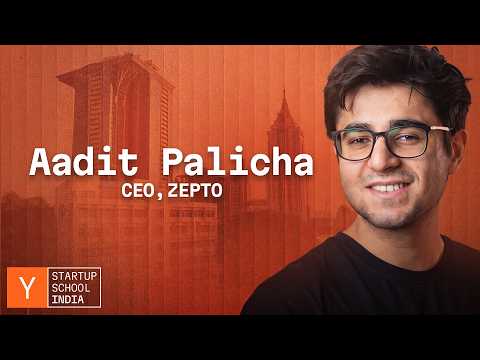
Why Zepto's Aadit Palicha Turned Down Stanford to Deliver Groceries
This content explores the origin story, operational philosophy, and scaling journey of Zepto, a leading Indian quick-commerce startup that evolved from a pandemic-era neighborhood delivery project into critical urban retail infrastructure.
Key Takeaways
- Zepto shifted from a neighborhood errand service to a high-density 'dark store' model after discovering existing grocery delivery players failed to meet customer needs for speed and precision.
- The founders prioritized early product-market fit metrics, including retention and order growth, before committing to drop out of university and scale the business full-time.
- By treating the app as a mere front-end for a massive physical supply chain, the company leveraged automation and AI to optimize forecasting, logistics, and ad revenue at massive scale.
- The business model is fundamentally designed around extreme customer experience, using 'reverse engineering' from desired outcomes to build efficient fulfillment infrastructure.
Talking Points
Analysis
Strategic Significance
Zepto demonstrates that in high-frequency retail, logistics density and control over the supply chain are the primary moat. By verticalizing the physical infrastructure, they differentiate themselves from mere delivery platforms that are vulnerable to operator churn.
Who Should Care
Founders in the logistics, retail, or emerging-market technology space will find this instructive. Investors and those curious about the future of hyperlocal commerce should pay attention to how physical infrastructure acts as a barrier to entry.
Contrarian Takeaway
Scaling rapidly is often considered a risk, but for Zepto, speed was a requirement to achieve the 'density' necessary to reach profitability. The conventional wisdom of 'being lean' at all costs can actually kill a physical-logistics startup if it prevents the upfront investment in critical infrastructure.
Time saved:
Back to Feed