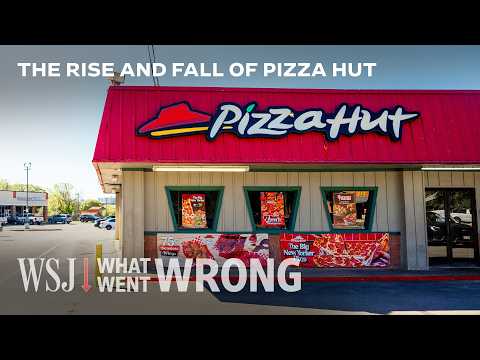
Pizza Hut Lost in the U.S. Now It’s Selling for $2.7B. | WSJ What Went Wrong

Video thumbnail: Pizza Hut Lost in the U.S. Now It’s Selling for $2.7B. | WSJ What Went Wrong
Jun 20, 20262m 50s video lengthThe Wall Street Journal

The Signal

Yum Brands is selling the Pizza Hut chain to private equity firm Long Range Capital, marking a separation of the struggling U.S. business from its high-performing operations in mainland China. While Yum Brands credits the divestiture to a strategic mismatch between Pizza Hut's dine-in heritage and modern demand for delivery, the deal's precise financial structure remains opaque, as parties navigate a fragmented exit. The core tension lies in whether private equity can successfully pivot a brand built on red roofs and pan pizza into a competitive delivery-first player, or if the asset's utility has simply expired.

The Case

  • Pizza Hut’s decline is framed by the source as a failure to adapt its "traditionally dine-in concept" to a market where Domino’s had long prioritized a delivery-first model.1:19
  • Yum Brands is structuring the exit geographically rather than as a single unit, with Long Range Capital acquiring the main business while Yum China takes over all mainland China operations.2:01
  • China stands out as the most valuable piece of the portfolio, currently serving as the country's largest casual dining brand with $2.3 billion in annual sales.2:19
  • The company asserts that the sale price represents a victory over analyst expectations, though no independent financial documentation or specific analyst benchmarks were provided to support this claim.
  • The total deal valuation of $2.7 billion is mentioned alongside a specific $1.5 billion purchase figure, leaving the precise allocation of value between the U.S. and Chinese segments unsettled.0:18

The 1 Minute Signal Take

The video offers a coherent explanation for the decline of a legacy brand but leans on corporate-friendly narratives regarding the "drag" of the U.S. business without showing the underlying books. It is useful for understanding the broad stroke of the brand split, but skip it if you are looking for a rigorous financial breakdown of the transaction mechanics.

Pro Analysis

Strategic Significance:

This divestiture highlights the critical importance of operational alignment over legacy brand equity. In the fa...

Full analysis always available on Pro.

Time saved:1m 9s

Share this

Tags