
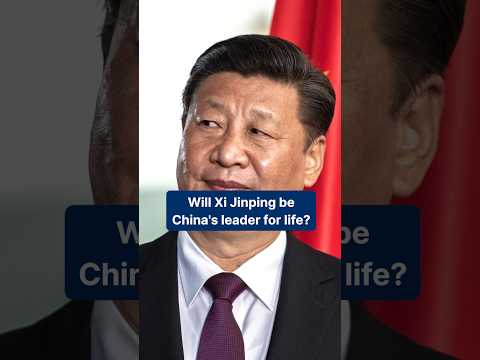
Why It Matters
Leadership succession is the single greatest point of failure for authoritarian regimes. The lack of a clear, institutionalized mechanism means that every transition is an existential moment. For China, the transition from Xi Jinping will determine whether the current governance model persists or if the country pivots toward a new, potentially divergent path.
Strategic Implications
If Xi identifies a successor early, that individual becomes an immediate target for both internal rivals and foreign influence operations—a prospect that likely delays any public announcement. Conversely, delaying the decision until the final hour increases the probability of a volatile succession crisis.
Evidence & Hype Audit
The content relies heavily on analyst intuition and the attribution of specific beliefs to Xi Jinping. While these beliefs are consistent with broader CCP rhetoric regarding the 'color revolutions,' the claim that Xi 'doesn't know what he's going to do' is speculative. The historical analogies to Stalin and Mao are classic political science arguments but assume that modern China's institutional frameworks are as fragile as the mid-20th-century Soviet or Chinese systems.
Counterarguments
It is possible that the Chinese Communist Party has developed robust, opaque mechanisms for succession that are not visible to outside observers. The focus on 'lifetime tenure' might be a Western framing of a system that is, in reality, far more institutionalized than it appears.
Who Should Care
- Global Investors: Need to monitor 'political stability' as a primary indicator for long-term capital allocation in China.
- Geopolitical Analysts: Should watch for personnel signaling rather than formal policy changes to gauge the direction of the next leadership phase.
What to Do Next
- Map the careers of high-ranking politburo members to identify potential deputy-level candidates.
- Monitor state media for shifts in discourse regarding Western 'consumerist' values, as this serves as a proxy for regime anxiety.
- Analyze previous CCP leadership changes for patterns of 'deputy testing' that may re-emerge.
- Avoid assuming that 'lifetime tenure' is a static state; remain open to sudden pivots in succession planning.