
Why It Matters
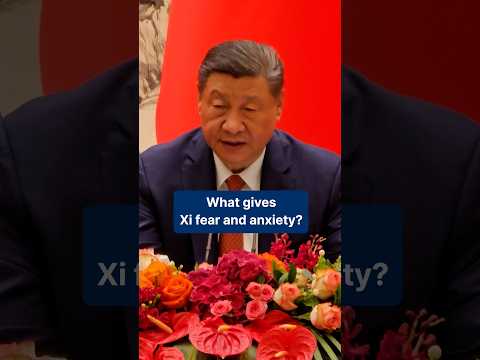
The analysis provided highlights the underlying tension between China's market-based economic reality and the CCP’s commitment to centralized authority. Understanding this struggle is essential for anyone tracking global market shifts, as it suggests that economic policy in China will remain subservient to the regime's existential need for control.
Strategic Implications
Businesses and governments should anticipate that the Chinese government will prioritize internal stability over economic efficiency or growth when these objectives collide. The current trajectory suggests a permanent preference for control-oriented policies that effectively create 'regulatory ceilings' on private sector activity.
Evidence & Hype Audit
The content relies heavily on behavioral inference rather than quantitative data. It functions more as an interpretive framework for observed political trends rather than a data-backed analysis. It is high-level and speculative regarding the private internal psychology of leadership.
Counterarguments
One could argue that Xi’s behavior is not fear-driven but purely rational strategy to ensure regime survival in an increasingly volatile global landscape. Viewed through this lens, 're-centralization' is not about panic, but about the long-term consolidation of power required to manage national security and global competition.
Who Should Care
- Investors: To understand the ceiling on growth for Chinese firms.
- Geopolitical Strategists: To interpret the internal pressures influencing PRC foreign policy.
- Policy Analysts: To model the threshold at which domestic unrest triggers state crackdown.
What To Do Next
- Analyze recent regulatory actions against private tech firms as indicators of 'market control' thresholds.
- Research historical patterns of CCP 'rectification' campaigns to predict future cycles of centralization.
- Assess the impact of economic slowdowns on the Party's willingness to relinquish control.
- Evaluate the role of social monitoring technologies as a mitigation tool for the 'fear of the people.'