
Back to Feed
Why $1M $3M Year Is So Hard
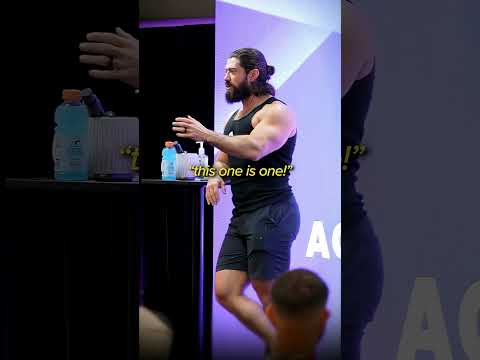
The Signal
Second-time founders frequently report that their new ventures outpace their first, a pattern the speaker attributes to improved internal pattern recognition rather than luck. The central tension lies in whether this success is a repeatable, learnable framework for hiring or simply an anecdotal observation of gains from accumulated experience and resources.
The Case
- Most attendees in the surveyed group reported that their second business grew faster than their first after an informal show of hands.
- The speaker argues that hiring quality improves through iterative failure, asserting that founders build a mental template for a "good" candidate only after repeated, often unsuccessful, attempts.
- This learning model is presented as role-specific, requiring founders to separately decode the patterns for distinct functions like an SDR, a salesperson, and a sales manager.
- The claim that pattern recognition improves business trajectory is asserted as a primary heuristic, though the speaker does not isolate this variable from other potential advantages like increased capital or network effects.
- The hierarchy of learning is framed as universal, with the speaker insisting that these templates must be built "across every department, across every level" to ensure consistent execution.
The 1 Minute Signal Take
This is a standard founder-to-founder heuristic that correctly identifies experience as a hiring accelerant but ignores the confounding variables—like available runway or brand recognition—that often make a second venture easier. Skip it, the summary captures the entire instructional value of the clip without the motivational padding.
Tags
Back to Feed