
Why It Matters
Mathematics serves as the foundational language of our technical reality. If the process of discovery is automated, the downstream effects on physics, engineering, and cryptography are profound. This isn't just about math; it is about the future of human intellectual agency.
Strategic Implications
Institutions must move away from 'proof-counting' as a metric of success. The shift to theory-building as the primary output of research will require new tenure and grant frameworks that reward synthesis over isolated theorem production. Failure to adapt will result in a disconnect between academic incentives and the reality of machine-assisted research.
Evidence & Hype Audit
This content is highly grounded in observational trends but relies on the speaker's expert intuition regarding institutional resilience. It avoids hyperbole about 'AGI' while acknowledging the velocity of AI progress. The argument for teaching as a funding anchor is logical but currently lacks hard granular data.
Counterarguments
Critics might argue that as AI approaches full theory-building capabilities, teaching will become the only remaining job for mathematicians, turning the entire field into a pure 'museum of human knowledge' rather than an active scientific frontier.
Who Should Care
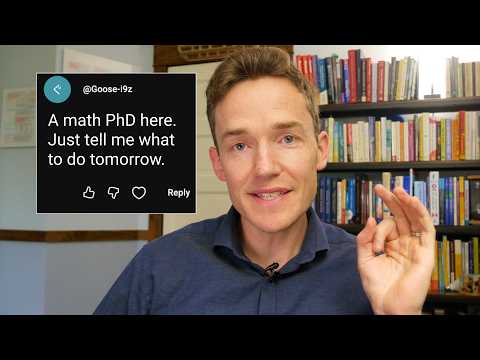
- PhD Students: Your career path needs to shift from 'proof-generator' to 'theory-synthesizer and communicator.'
- University Administrators: You must protect the relational, human-centric nature of teaching to maintain your financial and societal relevance.
- Policy Makers: The value of math departments is in the spillover of problem-solving talent; focus funding on the educational pipeline.
What to Do Next
- Audit your own mathematical practice: prioritize theory development over isolated proof exercises.
- Invest heavily in oral presentation skills; the ability to explain complex ideas is your primary competitive advantage against black-box models.
- Engage in transparent credit-tracing when using AI tools to ensure your research methodology remains intellectually honest.
- Curate your mathematical identity; if you find the thrill of discovery in human collaboration, lean into communities that value the human-to-human transmission of knowledge.