
Why it Matters
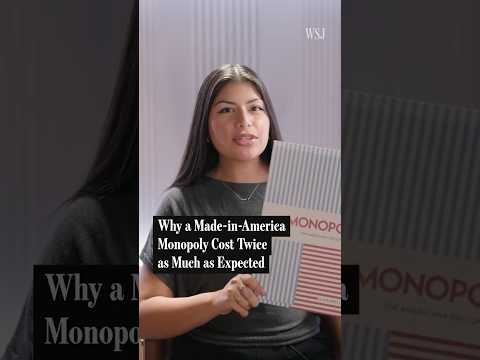
This case study highlights the tangible friction between political policy—specifically trade protectionism—and operational reality. It demonstrates that the transition to domestic production is not a plug-and-play process, but a fundamental redesign of a company’s entire value chain.
Strategic Implications
Companies relying on low-cost foreign labor are vulnerable to sudden geopolitical shifts. Relying on tariff-induced domestic production requires either a willingness to pass costs to the consumer or a fundamental rework of the product's value proposition. WS Game Company essentially moved from a high-quality, design-focused model to a survival-focused, utility-first model to preserve domestic status.
Evidence & Hype Audit
This is a grounded, high-fidelity report on a specific corporate failure-to-success story. It is not hype-driven; the company’s internal struggles (near-total failure, 100% cost overruns) are presented with refreshing transparency. It provides a rare look at the specific, unglamorous mechanics of supply chain shifting.
Counterarguments
One could argue that the project failed because the company attempted to replicate a model designed for China rather than innovating a unique U.S.-centric production process. Perhaps with a longer timeline, the cost and design compromises could have been mitigated.
Who Should Care
- Supply Chain Managers: To understand the hidden costs of tooling and component sourcing.
- Retail Executives: To learn how price-point target failures affect product marketability.
- Policy Analysts: To observe how trade tariffs impact niche manufacturing feasibility.
What to Do Next
- Analyze individual component sourcing to identify potential 'bottleneck' parts like dice.
- Model production costs using conservative local estimates rather than applying foreign benchmarks.
- Account for a 12-to-18-month lead time for establishing new, non-standard supply chains.
- Evaluate the trade-off between product aesthetics and domestic branding.