
Why It Matters
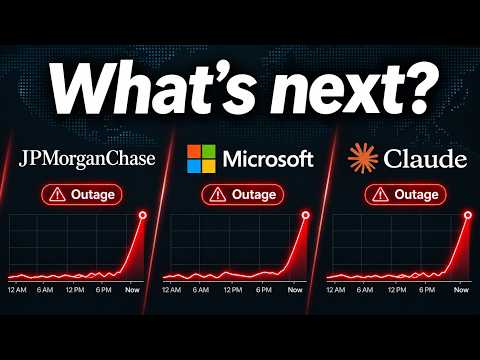
This content shifts the discourse from fear-based 'AI hacking' narratives to a grounded conversation about infrastructure fragility. It highlights a critical systemic trade-off: the security required to survive the AI era is the exact thing causing the current instability of our essential services.
Strategic Implications
Organizations must accept that 'invisible' legacy code is now a strategic liability. The need to accelerate patching cycles will inevitably collide with legacy systems' inability to absorb constant updates. This suggests a transition phase where stability decreases before security increases.
Evidence & Hype Audit
The content relies heavily on the narrator's interpretation of corporate statements. While it correctly identifies the distinction between 'reported' causes and 'proven' root causes, the claim that patching will cause fewer issues in the long run is an optimistic hypothesis that lacks empirical backing.
Counterarguments
A contrarian perspective would argue that blaming 'legacy systems' acts as a convenient scapegoat for poor quality assurance in modern dev-ops practices, regardless of the AI-driven urgency.
Role-Specific Takeaways
- For IT Leaders: Prioritize modular architecture to decouple core services from security-patch-heavy layers.
- For Investors: Evaluate the technical debt of financial institutions; those with the oldest stacks will likely face higher operational costs during this remediation phase.
What To Do Next
- Conduct a 'resilience audit' of your personal financial access points.
- Monitor official company PR pages rather than social media threads during major outages.
- Demand higher transparency from financial institutions regarding their patching schedules and risk management.
- Maintain a 'cold storage' of physical cash sufficient for 48 hours of emergency needs.