
This $8.6B AI Startup Is Betting It Can Make Any Car Self-Driving | WSJ
The Signal
Wayve, a London-based startup valued at $8.6B, is betting that end-to-end AI will outperform the industry-standard hybrid stacks used by incumbents. While the company claims to have spent five years perfecting this approach for broad, OEM-agnostic deployment, the industry remains unconvinced, with 78% of experts preferring hybrid architectures. The central tension is whether Wayve’s contrarian bet on generalization can actually replace the heavily mapped, rules-based systems currently leading the autonomous vehicle space.
The Case
- Wayve’s core product is an end-to-end AI system that claims to operate without high-definition maps or exorbitant compute, allowing it to be deployed on any vehicle or OEM.
- The company notes it has spent the last five years ensuring this system is compliant and verified for the automotive industry, a step intended to bridge the gap between research and commercial use.
- A McKinsey survey cited in the transcript reveals that 78% of autonomous vehicle experts still believe the hybrid, map-reliant approach is the most likely path forward, casting doubt on Wayve’s AI-first model.
- Uber and Wayve are currently preparing public-road robotaxi trials in London, though the narrator highlights that these are contingent on receiving a green light from British regulators.
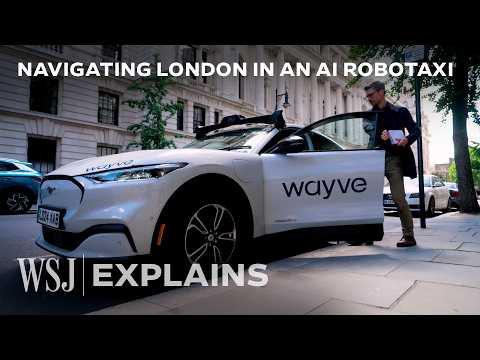
- The recent London demo drive, which featured a Wayve-equipped Ford Mustang Mach-E, was conducted under the supervision of a safety driver who remained ready to take control.
- Wayve has announced partnerships with Stellantis and Nissan to integrate its software into mass-market vehicles and anticipated robotaxi fleets, providing evidence of commercial interest beyond individual demos.
The 1 Minute Signal Take
This video is a effective, if promotional, overview of the technical divide defining modern autonomous development; skip it if you just want to know the strategy, but watch it if you want the visual confirmation of the supervised London demo and the specific framing used by the founder. The asymmetry between the company’s bullish claims and the broader expert consensus on hybrid stacks is the most important takeaway, as Wayve effectively admits it is going against the industry grain.
Time saved: