
Why It Matters
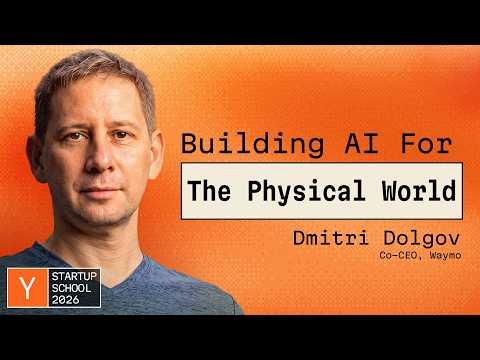
This content is a masterclass in the 'demo-to-product' transition. It reframes the current AI hype cycle by contrasting digital intelligence (which thrives on scale) with physical intelligence (which thrives on verification). It offers a blueprint for why most robotics companies currently struggle: they treat deployment as an extension of development, rather than a separate, harder discipline.
Strategic Implications
Waymo's approach suggests that the 'bitter lesson'—that general methods beat handcrafted ones—must be tempered by the realities of physical safety. The strategy of 'structure-augmented' learning provides a middle ground, ensuring that while models remain capable of learning complex dynamics, they are anchored by safety-critical constraints that prevent catastrophic failure. This indicates that future physical AI players will succeed not through bigger models alone, but through better evaluation and simulation infrastructure.
Evidence & Hype Audit
Waymo provides significant data on their safety outcomes (e.g., the 17x injury reduction statistic), which is more substantial than most competitors who offer only anecdotal clips. However, as an internal company leader, Dolgov has a vested interest in framing these metrics favorably. The claims are likely accurate within their defined operational parameters, but they are not universal; the safety advantage may not hold outside of the specific, well-mapped environments where Waymo operates.
Counterarguments
Critics might argue that Waymo’s heavy focus on 'structure' and legacy sensor fusion (lidar/radar) is a form of 'incumbent bias.' New entrants, leveraging advances in high-resolution computer vision and cheap, ubiquitous cameras, might reach parity with much smaller capital requirements, potentially making the current Waymo stack look like a bloated relic of the 2010s.
What To Do Next
- Conduct a 'reliability audit' of your current product pipeline to identify the specific 'nines' required for production.
- Invest in a simulation environment that can generate counterfactuals, not just replay logged data.
- Replace 'feature-first' roadmaps with 'safety-eval-first' development cycles.
- Evaluate all new model integrations against a 'stack-simplification' metric to avoid technical debt.
- Establish an open-publishing cadence for safety performance to preemptively build public trust.