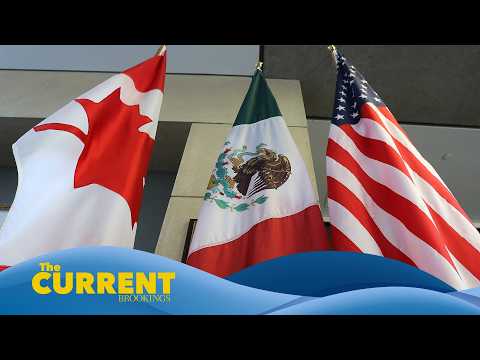
USMCA fails to renew—but it’s not over yet

Video thumbnail: USMCA fails to renew—but it’s not over yet
Jul 17, 202622m 55s video lengthBrookings Institution

The Signal

The USMCA remains in full operational force despite failing to secure an immediate 16-year renewal on July 1. This procedural pause triggered a review process rather than withdrawal, highlighting a central tension between the U.S. demand for better trade balance and regional partners' need for investment certainty amid deeply integrated manufacturing supply chains.

The Case

Status and Mechanics

  • The July 1 deadline did not terminate the USMCA; it triggered a required review that forced parties to choose between withdrawal, renewal, or deferral, with all sides opting to continue negotiations while keeping the pact alive.2:56
  • Brookings visiting fellow Chris Sands describes this outcome as a 'procedural success' because the structured review mechanism—designed to modernize the agreement unlike the static NAFTA—functioned as intended without ending trade.1:45
  • The agreement provides a long-term runway to an original sunset date, preventing the immediate economic shock that a withdrawal would have caused.5:09

Strategic Divergence

  • Mexico is pursuing an accommodationist strategy, trading concessions on migration controls, security cooperation, and restrictions on Chinese goods in hopes of preserving the status quo, often without specific reciprocal assurances from the U.S.18:02
  • Canada, led by rhetoric from Mark Carney regarding the need for national autonomy, is leaning into an independence-focused posture that remains constrained by the country's profound economic dependence on the U.S. market.19:38
  • The central economic case for the USMCA is continental integration; because Canada and Mexico are the largest combined consumers of American exports, U.S. protectionist moves that threaten this infrastructure could inadvertently harm U.S. internal markets.6:00

Unresolved Risks

  • Energy and critical minerals represent the most consequential strategic sub-issues, as North America lacks the integrated processing capacity needed to break a dependency on China, despite having strong raw resource advantages over Europe and Asia.11:32
  • Persistent uncertainty surrounding the final outcome of the review is beginning to suppress capital investment, as firms struggle to plan long-term spending against the backdrop of shifting content rules and potential administrative pivots.7:34

The 1 Minute Signal Take

The July 1 non-renewal demonstrates that USMCA review is an instrument for political leverage rather than a binary exit ramp. Investors and policymakers should look past the headline deficits and monitor sector-specific shifts in energy and mineral supply chains, which are more indicative of long-term North American competitiveness than formal diplomatic status.

Pro Analysis

Why it Matters

The USMCA represents the first major test of a 'sunset' trade negotiation mechanism. Because this mechanism allows for co...

Full analysis always available on Pro.

Time saved:20m 50s

Share this

Tags