
Channel: Council on Foreign Relations
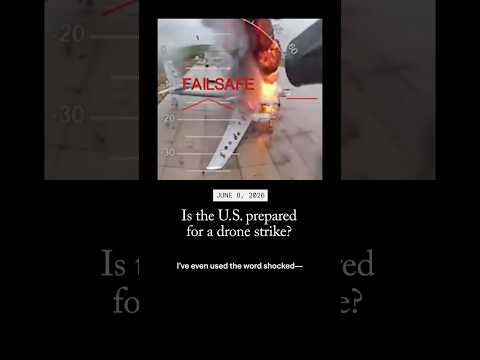
Is the U.S. prepared for a drone attack?
The Signal
The primary vulnerability in United States drone defense is not an external attack, but an internal one. The speaker argues that the federal strategy remains overly focused on borders while failing to secure against domestic incursions, asserting that we are vastly unprepared for an domestic drone event on the scale of Ukraine's Operation Spiderweb. The core dispute centers on whether centralized, high-tech systems like 'Golden Dome' can mitigate this threat or if security requires a bottom-up, integrated coordination between local, state, and national commands.
The Case
- The speaker describes the U.S. as being 'not nearly as prepared' for an inside drone threat as it is for external ones, noting that the country has not yet experienced an event equivalent to the deep-strike capabilities demonstrated by Ukraine in Operation Spiderweb.
- Skepticism is directed at the 'Golden Dome' program, which the speaker dismisses as a insufficient high-tech solution that cannot replace the necessity for 'very local' detection measures.
- Prior drone sightings in New Jersey and at Langley Air Force Base are cited as concrete warning signs that the threat environment has already reached domestic soil, though the speaker provides no granular details on these specific incidents.
- Reports of senior military dissatisfaction are invoked, with the speaker claiming that retired four-star generals appeared on '60 Minutes' to voice discomfort regarding the current state of Northern Command's readiness.
- The speaker advocates for a massive overhaul of national coordination, arguing that effective defense requires seamless integration across local law enforcement, state agencies, the National Guard, and Northern Command.
The 1 Minute Signal Take
The speaker’s argument rests on the logical premise that a distributed, decentralized threat cannot be neutralized by a static, centralized system. While the reliance on secondhand anecdotes from '60 Minutes' and the lack of technical detail on 'Golden Dome' make this an illustrative rather than an evidence-based debrief, the call for layered, local-to-federal integration is a standard, reputable critique of current military-industrial procurement. Skip it if you are looking for a technical deep dive; watch it if you want an articulate summary of the 'inside threat' logic that informs current debates on domestic drone surveillance.
Tags
Channel: Council on Foreign Relations