
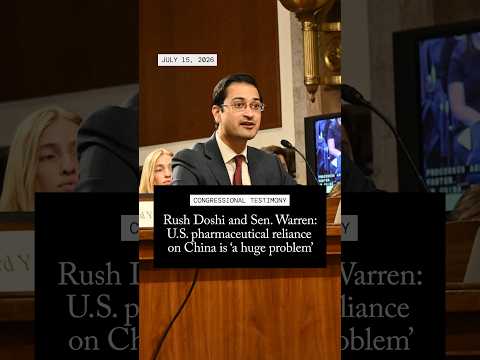
Why It Matters
The reliance on foreign active ingredients for essential medications introduces a systemic risk to the U.S. healthcare infrastructure. If supply chains are disrupted, the government has no immediate fallback due to the lack of domestic capacity and the absence of prior procurement planning.
Strategic Implications
The shift from a 'lowest-cost' to a 'resilient-supply' sourcing model represents a transition toward industrial policy. By leveraging size, the U.S. can effectively force a market correction in sectors where commercial actors previously found no incentive to diversify.
Evidence & Hype Audit
This content is essentially a high-level policy proposal. It lacks empirical evidence demonstrating that current private-sector actors cannot or will not adapt without such interventions. It is not 'hype' per se, but it is a speculative argument for government-led market shaping.
Counterarguments
One risk is 'regulatory capture' or inefficiency, where government-mandated procurement leads to higher costs and lower innovation over time. Another counter-point is that China’s comparative advantage in chemical manufacturing is structural and cannot be overcome simply by changing purchasing rules, potentially requiring massive subsidies instead.
Who Should Care
- Procurement Officers: Need to update RFPs to include supply-chain transparency requirements.
- Policy Makers: Should evaluate if the current procurement system is working against national security goals.
- Pharmaceutical Logistics Leaders: Must prepare for potential shifts in federal contract standards that favor resilient sourcing.
What to Do Next
- Conduct a supply-chain audit of all active pharmaceutical ingredients.
- Define 'resilience' metrics for future federal drug contracts.
- Analyze cost-impact studies comparing current vs. resilience-first procurement.
- Implement pilot programs in non-critical drug categories to test demand stability models.