
Why It Matters
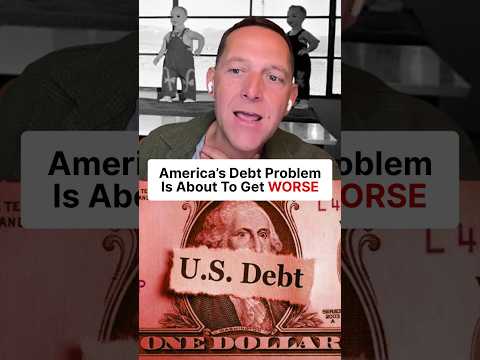
This analysis highlights a critical transition point in U.S. economic history where fiscal policy replaces monetary policy as the primary driver of volatility. When the scale of debt rollover reaches $10 trillion annually, the federal budget becomes hyper-sensitive to market sentiment, reducing the government's ability to maneuver during economic downturns.
Strategic Implications
For investors and institutions, this suggests that the 'Fed Put' or the assumption of central bank intervention may be reaching its limit. If the long end of the yield curve is truly driven by fiscal solvency rather than Fed policy, traditional hedging strategies based on interest rate cuts may fail to protect against long-term bond price declines.
Evidence & Hype Audit
This content is high-signal but leans into alarmist, 'black-box' heuristic claims. While the $10 trillion refinancing figure is a matter of public record, the claim that every 1% interest rate change costs 1.25% of GDP is a simplified heuristic that lacks in-transcript sourcing. The content effectively identifies the tension but presents the speaker’s personal theory as a settled macro-reality.
Counterarguments
Critics might argue that the 'fiscal solvency' narrative underestimates the global demand for the U.S. Dollar and Treasury assets. As long as the U.S. remains the global reserve currency, the government may be able to sustain higher debt-to-GDP ratios than traditional math suggests, as the world lacks a sufficiently large and liquid alternative to hold safely.
Who Should Care
- Fixed Income Investors: Watch for duration risk and the shifting sentiment toward fiscal policy.
- Fiscal Policy Analysts: Must weigh the trade-off between debt sustainability and recession risk.
- Corporate Strategists: Need to model the impact of higher 'risk-free' rates on capital intensive growth plans.
What to Do Next
- Monitor Treasury issuance schedules to gauge short-term supply/demand imbalances.
- Analyze the sensitivity of federal interest outlays against various yield curve scenarios.
- Evaluate the political feasibility of long-term entitlement reform as a mechanism for deficit reduction.
- Stress-test portfolios against a scenario where the 'long end' of the yield curve remains elevated despite Fed rate cuts.