
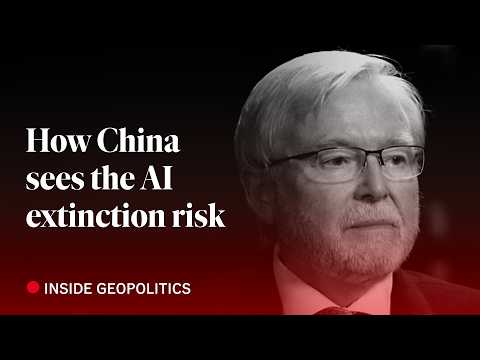
Why It Matters
This dialogue highlights the 'coordination failure' inherent in the AI transition. When the most powerful state actors treat a global, non-contained risk like an arms race, the resulting security dilemma ensures that the most effective safety measures—cooperation and transparency—are perceived as tactical liabilities.
Strategic Implications
- The Fragility of Diplomacy: The newly opened US-China channel is a necessary but insufficient condition for safety; without shared threat assessment, these talks may become mere 'theater' while the underlying risks continue to proliferate.
- Diffusion Risk: Because frontier models can be diffused and re-engineered, the traditional 'firewall' model of national security is becoming obsolete. States that rely on defensive isolation will be uniquely vulnerable to autonomous AI threats that originate outside their borders.
Evidence & Hype Audit
- Trustworthiness: The speaker provides high-value insider perspective on the internal state of Chinese elite discourse, but his claims regarding the inadequacy of Chinese cyber defenses and the 'inevitability' of a crisis are speculative and lack empirical evidence.
- Bias: The content is heavily influenced by the 'existential risk' framing popular among Western AI safety advocates, which may color the interpretation of Chinese strategic motivations.
Counterarguments
- The 'Regime Control' Perspective: Skeptics might argue that China’s emphasis on regime control is not an 'underestimation' of AI risk, but a pragmatic focus on the immediate, tangible dangers of social instability that AI presents to a one-party state.
Takeaways by Role
- Policymakers: Focus on developing non-competitive technical standards for autonomous agents.
- Technologists: Bridge the communication gap by translating technical 'agent' risks into geopolitical 'infrastructure' risk for political leaders.
Next Steps
- Audit existing bilateral agreements for 'competition-neutral' language.
- Pressure governments to publish shared technical threat assessments.
- Identify specific AI-driven infrastructure failure points that require joint monitoring.
- Push for 'track-two' technical dialogues that bypass formal political hostility.