
Strategic Implications
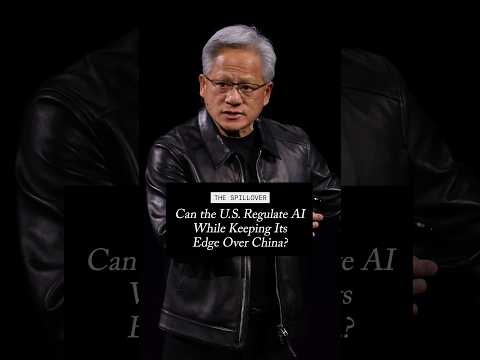
The central tension identified is the 'governance paradox': the more a state regulates to achieve safety, the more it risks creating a strategic disadvantage that eventually hands regulatory dominance to its rivals. By asserting that rule-setting power is a function of technological leadership, the speaker shifts the debate from a moral question of 'should we regulate' to a realist question of 'who gets to define the future of the global stack.'
Evidence & Hype Audit
This content is highly normative and strategic rather than empirical. It relies on the assertion that 'power' follows the cutting edge, which is a common geopolitical assumption but remains unproven in the context of specific AI architectures. The mention of NVIDIA is clearly flavor-text or distraction, devoid of evidence, and serves to anchor the discussion in familiar corporate rivalries rather than technical substance.
Counterarguments
Critics of this 'frontier-first' approach would argue that technological leadership does not guarantee normative influence. If a country leads in development but uses that power to create closed or proprietary standards, it may trigger an aggressive 'balkanization' of AI, forcing other nations to develop alternatives that intentionally ignore U.S.-led governance frameworks.
Who Should Care
- Policymakers: To recognize that 'safety' regulation that kills local R&D is a self-defeating geopolitical strategy.
- Defense Planners: To recognize that the next generation of power may come from 'distilled' models in theater rather than just the most expensive frontier foundation models.
What to Do Next
- Map the critical use cases where distilled models are currently influencing military operations.
- Develop a framework for international standards that focuses on 'interoperability for safety' rather than 'coordination for control.'
- Quantify the R&D delta between frontier labs and the next tier of accessible distilled models.
- Evaluate which specific institutional bodies are best positioned to act as a bridge between technical innovators and regulatory oversight.