
Why it matters
LangChain represents the transition from static LLM inference to dynamic, autonomous agentic systems. By standardizing the 'plumbing' required to bridge models with tools, it lowered the barrier to entry for building complex, task-oriented applications, shifting AI development from prompt engineering to system orchestration.
Strategic implications
Companies adopting LangChain are essentially buying into an ecosystem that favors orchestration over model-specific optimization. This approach prioritizes agility—the ability to swap models or tools dynamically—over deep integration with a single model provider's proprietary stack. However, this creates a dependency on LangChain's abstractions, which may become a bottleneck if the framework's internal logic deviates from underlying model capabilities.
Evidence & Hype Audit
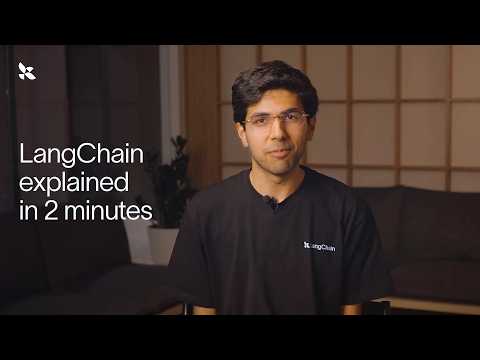
This content is a high-level product introduction rather than a technical critique. The claims regarding the prevalence of ReAct agents and the causal role of LangChain in 'making real-world AI applications possible' are marketing assertions rather than data-driven findings. It lacks a comparative analysis of competing frameworks (like Microsoft's AutoGen or smaller, lighter-weight alternatives), making it a biased but accurate description of the LangChain value proposition.
Counterarguments
Critics argue that frameworks like LangChain introduce unnecessary abstractions that obscure what is happening at the prompt level, potentially leading to 'leaky' abstractions. Furthermore, as models become more natively agentic (with built-in tool use), the need for an external orchestration layer may diminish.
Who should care
- Software Architects: Focus on the lifecycle management and observability tools (LangSmith).
- Product Managers: Evaluate the trade-offs between model-native tool use vs. framework-dependent orchestration.
- AI Engineers: Standardizing build processes using agentic abstractions.
What to do next
- Explore current LangChain abstractions for tool-calling loops.
- Evaluate the overhead of adding an orchestration layer to your current LLM implementation.
- Compare LangSmith against alternative observability tools in the LLM-ops space.
- Build a prototype agent to test the 'human-in-the-loop' integration features.
- Audit your current agents for observability gaps in production.