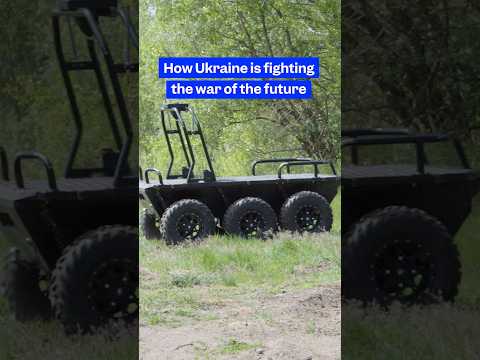
We saw firsthand how #Ukraine's #defense industry has changed dramatically in a little over a year.

Video thumbnail: We saw firsthand how #Ukraine's #defense industry has changed dramatically in a little over a year.
Jul 29, 20261m 34s video lengthBusiness Insider

The Signal

Ukraine’s defense industry has rapidly evolved from reliance on Western hardware to developing an indigenous ecosystem of robotic combat systems. In just 14 months, local developers have fielded uncrewed ground vehicles (UGVs) and heavy bomber drones, surfacing a tension between the immediate, observable tactical gains and the speaker’s ambitious claim that Ukraine now leads global wartime innovation.

The Case

Technological expansion

  • Ukraine has diversified its battlefield technology beyond the initial focus on FPV drones, fielding new classes of weapons including the Peroon Max, a large drone intended for bomber missions.0:31
  • The Peroon Max utilizes Starlink for navigation rather than standard radio frequencies and GPS, a design choice the developer claims reduces its vulnerability to electronic warfare.
  • UGV ground robots are now performing tasks in the "kill zone," including the deployment of FPV drones and the evacuation of soldiers, appearing to supplement human roles under fire.0:48

Strategic context

  • The reporting took place during one of the heaviest combined missile-and-drone attacks of the war, underscoring the extreme pressure forcing this rapid, necessity-driven adaptation.1:09
  • While the speaker contends that these developments position Ukraine as a global leader in wartime technology, the transcript does not provide comparative evidence to support this ranking against other nations.
  • The claim that robots are "replacing" human soldiers in combat is presented as an observation of mission roles; it remains unclear whether these units serve as complete replacements or situational force multipliers.

The 1 Minute Signal Take

Ukraine’s rapid transition to domestic weapons production demonstrates a high degree of technical agility, though speculative claims about global dominance should be separated from the documented reality of their battlefield adaptations. The focus on Starlink-integrated platforms highlights how effectively smaller nations can disrupt tactical norms by bypassing traditional GPS-dependent architectures.

Pro Analysis

Why It Matters

This shift represents an important case study in decentralized, urgent military procurement. It demonstrates how a nation can bypass traditional, slow-moving defense industrial pipelines by leveraging dual-use technology (like Starlink) and agile local startups to create a 'good enough' response to existential threats.

Strategic Implications

If these robotics systems prove durable, the doctrine of the 'kill zone' will likely be rewritten to prioritize the conservation of human capital. Nations that ignore the rapid integration of UGV-based logistics and strike platforms may find themselves at a significant disadvantage in high-intensity conflicts where drone density makes manual movement of personnel and equipment increasingly lethal.

Evidence & Hype Audit

The report provides anecdotal evidence of technological progress rather than systematic data. The claims regarding the superiority of Starlink-connected drones over traditional encrypted radio links lack published test data, leaving the extent of their resilience to sophisticated electronic warfare unverified. The assertion that Ukraine is 'leading the global advancement' is an editorial interpretation of the observed innovation speed, not a measured quantitative comparison with global defense programs.

Who Should Care

  • Defense Analysts: To track the move toward autonomous casualty evacuation systems.
  • Tech Investors: To assess how dual-use satellite internet services alter military platform survivability.
  • Military Planners: To evaluate the feasibility of fielding domestic, agile drone platforms during active combat.

What To Do Next

  • Analyze the failure rates of Starlink-linked drones under active GPS/RF jamming conditions.
  • Compare the operational cost of current UGV evacuation models against traditional rapid-response armor.
  • Investigate the supply chain security of Ukrainian drone components to identify long-term production constraints.
  • Cross-reference these domestic developments with broader NATO tactical shifts in drone integration.

Share this

Tags

Written by: 1 Minute Signal Editorial Team