
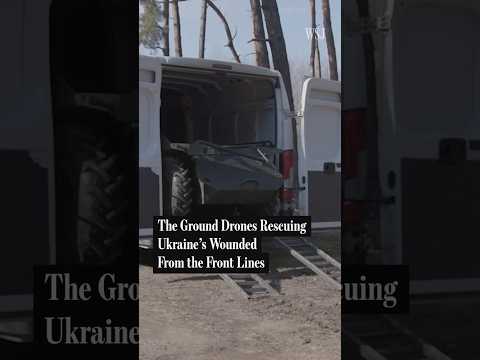
- The UGV platform is specifically engineered to be a low-maintenance, stripped-down logistical tool for the front line.
- Automating supply and casualty runs significantly lowers the targeting window for lethal Russian aerial drones.
- The current iteration lacks advanced suspension, creating a high level of discomfort for passengers that may aggravate existing medical conditions.
Channel: The Wall Street Journal
The Ground Drones Rescuing Ukraine's Wounded From the Front Lines | WSJ
This content examines the role of Roette's minimalist unmanned ground vehicles in the Ukrainian military, highlighting their utility for logistics and casualty evacuation.
Key Takeaways
- Roette provides the Ukrainian military with simple, repairable, and highly versatile unmanned ground vehicles.
- These platforms automate dangerous logistics missions, reducing the frequency of soldier exposure to aerial drone strikes.
- The design prioritizes extreme simplicity, though this results in a physically jarring experience for injured occupants.
Talking Points
Analysis
Strategic Significance
These UGVs represent a shift toward "attrition-resistant" logistics. By using cheap, modular, and replaceable assets, the military can sustain operations even when the platforms themselves are frequently destroyed by the enemy.
Who Should Care
Military planners and defense manufacturers should observe how this platform prioritizes ease of in-field repair over technological complexity, a lesson in scalability for asymmetric warfare.
Contrarian Takeaway
Extreme simplicity, often heralded as a feature, may actually limit the utility of life-saving equipment; in this case, the lack of suspension creates a 'transport gap' where the vehicle saves a soldier from drone fire only to cause further injury during transit.
Time saved:
Channel: The Wall Street Journal