
Back to Feed
Lawmakers skeptical of UFO cover-up despite bipartisan support for disclosure | On Balance
The Signal
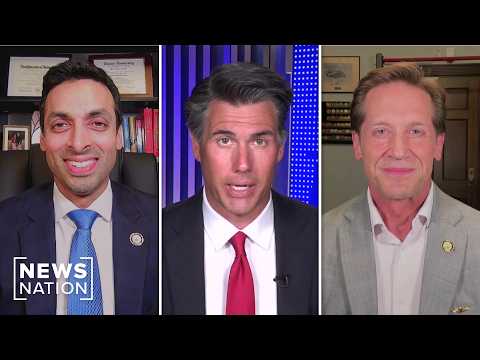
This conversation between a House Oversight Committee member and a fellow interlocutor centers on whether government secrecy regarding unidentified phenomena is a functional necessity or a sprawling conspiracy. While the interlocutor pushes for full disclosure given the existence of unexplainable data, Rep. Richard McCormick, a former Marine Corps pilot, disputes the existence of a grand coverup and suggests that transparency must remain balanced against the risk of exposing sensitive U.S. or foreign surveillance technology. The core tension lies between the public's right to assess unexplained phenomena and the state's requirement to protect national security assets.
The Case
- Rep. Richard McCormick, who served 16 years as a Marine pilot, argues that sightings of unexplained objects are inherently distinct from extraterrestrial contact, noting that being unable to identify a phenomenon is not the same as identifying it as non-human.
- A specific rationale provided for withholding information is the potential compromise of strategic intelligence: "There are things we can’t release because maybe it’s US technology or maybe it’s technology from other countries that we’re surveilling."
- The pro-disclosure side asserts that "several leading scientists" have disappeared and that the government possesses briefings on multiple types of alien entities, though these claims remain unsupported by evidence within the transcript.
- Discussions regarding a suspected "huge coverup" are dismissed by McCormick, who compares the demand for mass disclosure to the JFK files, suggesting that releasing bulk documentation often yields less substantive truth than the public expects.
- One speaker posits that current disclosure cycles coincide suspiciously with media events like Steven Spielberg’s film releases, though this remains conjecture rather than documented fact.
The 1 Minute Signal Take
The exchange is a predictable clash between institutional skepticism and conspiratorial urgency, ultimately shedding more light on political rhetoric than on the phenomena themselves. McCormick provides a sober, plausible limit on transparency, while his interlocutor relies on unverified anecdotes that the transcript fails to substantiate. Skip this video, as the summary captures the essential arguments without the noise of garbled whistleblower references.
Time saved:
Tags
Back to Feed