
Why It Matters
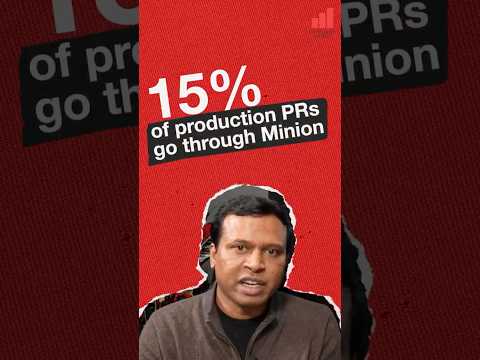
This implementation marks a shift from 'AI as an autocomplete tool' to 'AI as an integrated team member.' By hitting a 15% adoption rate for production code, Uber is demonstrating that AI agents are moving out of the sandbox and into the critical path of infrastructure deployment.
Strategic Implications
The reliance on Slack as the primary control surface suggests a broader trend: the 'de-webification' of engineering workflows. As agents become more capable, the traditional web dashboard may become a secondary monitoring tool rather than a primary workspace. This lowers the barrier to entry for complex tasks but also increases the risk of 'black box' code generation if the underlying Slack thread context is ambiguous.
Evidence & Hype Audit
The 15% statistic is high-signal and suggests meaningful penetration. However, the lack of information regarding error rates, rollback frequency, or the depth of the Slack context window leaves some questions about the reliability of this tool in high-stakes production environments.
Counterarguments
A primary concern is the 'context drift' risk. If Minion relies heavily on Slack threads, the quality of its output is at the mercy of how well humans communicate. In decentralized or fast-moving teams, a messy thread could lead to a flawed PR, potentially increasing the burden on senior engineers who must perform more rigorous code reviews.
Who Should Care
- Engineering Managers: Look for ways to standardize specs so AI can handle more of your team's routine workload.
- Product Managers: Understand how your design discussions can now act as direct inputs for engineering execution.
- DevOps/Infrastructure Teams: Monitor for changes in code quality or PR patterns as agent-based automation scales.
What to Do Next
- Audit which repetitive PR tasks in your pipeline are 'high-spec' enough to automate.
- Evaluate the current quality of your internal communication channels, as they may become the source-of-truth input for your AI agents.
- Establish a clear 'human-in-the-loop' protocol for reviewing agent-generated PRs.
- Analyze your team's context-switching overhead to identify where chat-native tooling could save time.