
Back to Feed
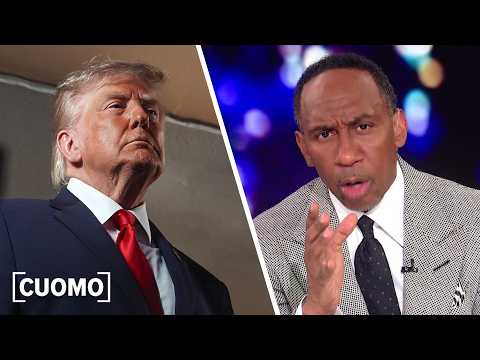
Stephen A. Smith blames Trump for Knicks Game 3 loss: 'He betrayed all of us' | CUOMO
The Signal
A heated debate exists over whether Donald Trump’s attendance at a New York Knicks game disrupted the team's winning rhythm and ruined the Madison Square Garden atmosphere. One speaker argues his presence acted as a class-based exclusion that destroyed the team's 'mojo,' while a critic dismisses the performance-blame as a post hoc political maneuver.
The Case
- A speaker contends that Trump, a Queens-born real estate mogul and longtime Knicks attendee, betrayed the team by showing up during their high-stakes playoff run, allegedly turning a rabid, unified environment into a exclusionary event for elites.
- The speaker asserts that security measures displaced 6,000–7,000 fans to areas like Bryant Park and Central Park, forcing them to watch the game on television instead of inside the arena.
- The central causal claim that Trump’s arrival 'messed up the mojo' and caused the Knicks’ poor performance—noting specifically that players like Jalen Brunson and Mikal Bridges lost their offensive cohesion—is framed by the speaker as an objective loss of fluidity.
- A counter-participant contests this narrative by arguing that the crowd would have booed the former president regardless of his impact on the team, characterizing the obsession with his presence as an over-politicized framing of a standard sports loss.
- Both speakers offer subjective interpretations of the game’s atmosphere and the political stakes of the incident, with the primary argument regarding Trump's responsibility for the loss remaining entirely unsubstantiated by any observable causal mechanism in the transcript.
The 1 Minute Signal Take
The video functions primarily as a vent for fan frustration; it offers no objective evidence to support the claim that Trump’s physical presence dictated the outcome of a basketball game. The political framing is speculative, and the speaker’s own claims about crowd displacement figures are garbled and unsupported. Skip this; the summary captures the entirety of the arguments and the lack of underlying proof for the central premise.
Time saved:
Tags
Back to Feed