
Back to Feed
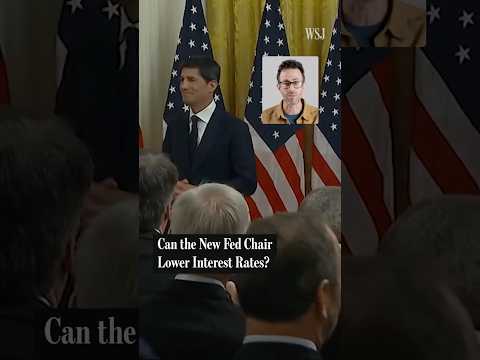
Why Bond Markets Pose a Problem for Fed’s Kevin Warsh | WSJ
The Signal
President Trump has appointed a new Fed chair, Worsh, with an explicit mandate to lower interest rates, evidenced by a rare White House swearing-in ceremony. However, this political agenda is colliding with a bond market that is resisting influence, as 30-year Treasury yields have surged to nearly two-decade highs. The central tension lies in whether a presidential mandate can successfully override market-driven borrowing costs that are rising on fears of inflation and geopolitical instability.
The Case
- The 30-year Treasury yield, a key indicator for long-term borrowing costs, has hit its highest level in nearly twenty years, signaling that investors are demanding higher risk premiums to hold U.S. debt.
- While Trump has signaled a clear directive to "get rates down," the Fed chair is only one of 12 voting members on the committee that sets policy, meaning institutional control is heavily constrained.
- Higher bond yields are already forcing up costs for consumers and businesses, specifically impacting mortgages, car loans, and various forms of commercial financing.
- The narrator claims the current yield pressure is driven by renewed inflation and energy price spikes tied to the Iran war, though this causal chain is asserted without empirical evidence.
- Worsh previously supported shrinking the Federal Reserve's balance sheet, a policy the video now labels counterproductive because selling bonds would likely push yields even higher.
The 1 Minute Signal Take
The video effectively delineates the structural reality that long-term interest rates are set by global bond markets, not the Federal Reserve. While the case against the Fed’s ability to unilaterally force rates down is well-grounded in market mechanics, the video’s specific causal links to the Iran war remain speculative. Watch this if you want a clear, two-minute breakdown of why political pressure on the Fed often fails to move the needle on real-world borrowing costs.
Time saved:
Back to Feed