
Why It Matters
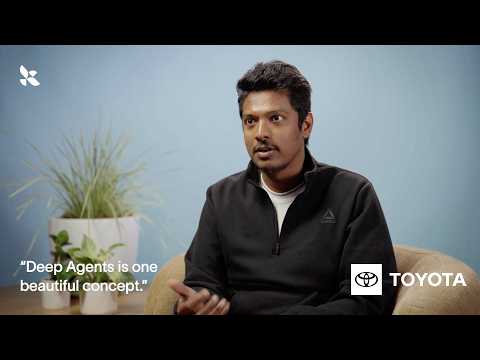
Toyota’s approach illustrates a fundamental shift in enterprise AI: moving from 'chatbots' that summarize documents to 'agents' that act as an integration layer for core business operations. This signifies a move toward autonomous R&D, where the bottleneck is no longer access to data, but the speed of synthesizing it across technical silos.
Strategic Implications
The strategy hinges on the 'harness' architecture. By building an abstraction layer over existing systems (SQL, corrosion labs, supply chain tools), Toyota can legacy-proof their infrastructure. The agent becomes the 'glue' that enables future AI updates without requiring a complete overhaul of underlying technical systems.
Evidence & Hype Audit
The technical description of the agent harness and LangSmith integration is concrete and carries high face validity. However, the claim that R&D agents are directly responsible for the quality of 'paint and seats' is a strong organizational assertion. There is no hard data provided to establish a causal link, making this a typical example of corporate 'success story' narrative framing.
Counterarguments
A significant risk here is the 'black box' problem of institutional knowledge. If the agent’s reasoning is based on undocumented internal skills, debugging why an agent fails in a specific manufacturing context could become as difficult as training a human expert. Over-reliance on a single-command harness also creates a massive single point of failure if the agent orchestration layer goes offline.
Who Should Care
- Engineering Managers: For the focus on using observability (LangSmith) to treat outliers as a remediation loop.
- Enterprise Architects: For the model of using an agentic harness to unify legacy SQL/tooling silos.
- AI Practitioners: For the practical application of feeding curated skills into agents to bias them toward company-specific institutional logic.
What to Do Next
- Audit your own organization for 'fragmented expertise' that resides in disconnected systems.
- Define a 'skill registry' that codifies your organization's specific technical workflows.
- Implement end-to-end tracing for your AI agents to specifically monitor for edge-case failures.
- Develop an internal dashboard to track not just usage volume, but the specific 'outliers' where agents fail to meet internal standards.