
Why It Matters
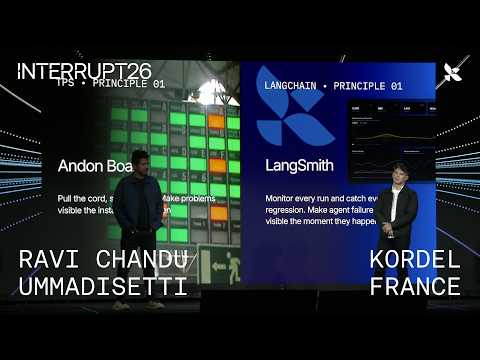
Toyota's approach demonstrates the transition of GenAI from experimental 'toy' applications to foundational enterprise infrastructure. Instead of treating agents as standalone projects, Toyota is treating them as products on a factory line, which is the necessary next step for large-scale industrial adoption.
Strategic Implications
By tying agent deployment to configuration-managed graphs, Toyota centralizes its security and governance surface. This reduces the 'shadow AI' risk that plagues many large enterprises, as engineers are incentivized to build with the platform rather than around it.
Evidence & Hype Audit
This content is a high-level self-report. While the examples (GearPull, R&D GPT) are compelling, the specific metrics (six months to four days) are likely 'best-case' outcomes. The assertion that LangChain is the 'future bedrock of all SaaS' is clearly marketing-influenced hyperbole rather than an architectural inevitability.
Counterarguments
The 'no security review' claim is concerning. In a highly regulated environment like automotive manufacturing, claiming a total absence of review suggests either extreme faith in the underlying template or an underestimation of compliance depth. Standardizing too aggressively can also create 'system brittleness' where if the core platform breaks, 50+ dependent agents go down simultaneously.
What to do next
- Audit your organization for duplicate AI ingestion pipelines and centralize them now.
- Adopt observable orchestration frameworks like LangGraph to identify failure modes before they reach end users.
- Build your 'extraction layer' as a distinct, reusable foundation before focusing on agent logic.
- Define your 'skills' library as modular components rather than monolithic agent code.