
Back to Feed
Why Clean Energy Needs a Spinning Machine
The Signal
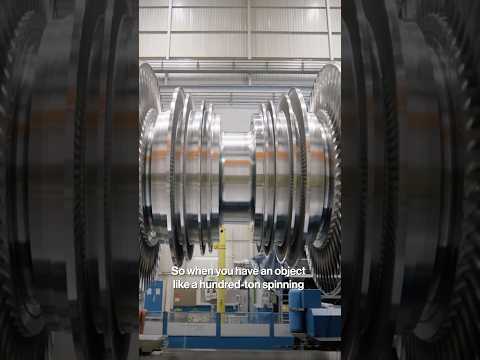
Grid stability requires supply and demand to align second by second, a balance traditionally maintained by the physical inertia of massive, spinning generators in coal, gas, nuclear, and hydro plants. As solar power—which lacks these rotating devices—grows, the grid faces potential instability from lost emergency buffering. A synchronous compensator is a proposed retrofit: a 100-ton machine that spins at 1500 RPM like a generator, but requires no fossil fuel, theoretically injecting inertia back into the system to prevent voltage spikes and grid disconnections during outages.
The Case
- Grid stability functions on the physical law of inertia; when a power plant suddenly goes down, heavy, 100-ton spinning rotors can momentarily inject stored mechanical energy to maintain grid frequency until other systems compensate.
- Solar generation is framed by the narrator as lacking this inherent rotating mass, creating a specific engineering gap where the grid loses its natural 'flywheel' effect during supply drops.
- The synchronous compensator is presented as an inert, non-fuel-burning substitute that physically replicates the inertia of traditional power plants, providing the same stabilizing mechanical resistance without combustion.
- The claim that adding enough of these units will give the grid 'all the inertia it needs' is underspecified, as the transcript provides no metrics, deployment limits, or comparative costs to verify if the hardware is sufficient as a standalone solution.
The 1 Minute Signal Take
This is a clear, if simplified, explanation of a physical grid-support problem that is becoming more common as renewable penetration increases. It captures the engineering mechanism well but glides over the economic and comparative feasibility of these units against other stabilization methods. Watch it if you need a quick conceptual primer on grid physics, but skip it if you are looking for an analysis of actual deployment scaling or cost efficiency.
Time saved:
Back to Feed