
Why It Matters
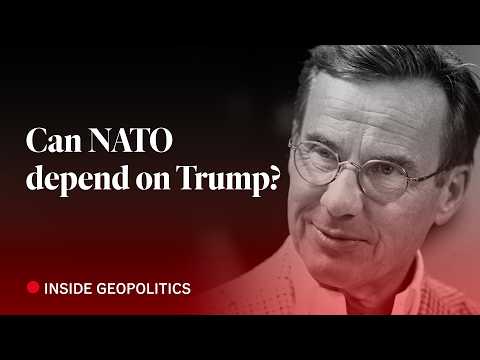
The transition of Sweden from a 'secretly Western' neutral actor to a vocal NATO participant marks a significant shift in European security architecture. It signals the end of the post-Cold War comfort in relying solely on the US security umbrella and highlights a growing desire among 'middle powers' to build sovereign, redundant security capacities.
Strategic Implications
Sweden’s emphasis on regional integration suggests that the future of NATO is not just about the transatlantic link, but about the formation of resilient regional security clusters. By treating procurement as an extension of foreign policy, Sweden is attempting to insulate its national sovereignty from the political whims of its primary security guarantor.
Evidence & Hype Audit
The content relies heavily on rhetorical framing and the Prime Minister’s subjective policy interpretation. It lacks hard data regarding specific military readiness or the economic impacts of defense sales. It is an 'insider' perspective, valuable for understanding political signaling, but it should be viewed as advocacy rather than a neutral technical assessment.
Counterarguments
A skeptic might argue that 'spreading dependencies' actually weakens the alliance by diluting the efficiency of standardized US systems. Furthermore, attempting to play the role of an independent, frank actor while remaining deeply integrated into NATO creates potential for diplomatic friction that may be harder to manage than the previous era of quiet, secret alignment.
Who Should Care
- Defense Industry Analysts: For insights into how 'middle powers' will market indigenous equipment.
- National Security Strategists: For understanding the shifting reliance on US technology and 'kill switches.'
- Diplomatic Corps: For observing the nuance of balancing 'frankness' with pragmatic economic and security partnerships.
What to Do Next
- Monitor the finalization of the Gripen deal with Canada as a bellwether for European market expansion.
- Evaluate domestic defense procurement portfolios for single-source vendor risks.
- Assess the political resilience of regional security agreements against shifting US electoral cycles.
- Develop frameworks for managing vendor relations that account for technical 'kill-switch' or political lockout risks.