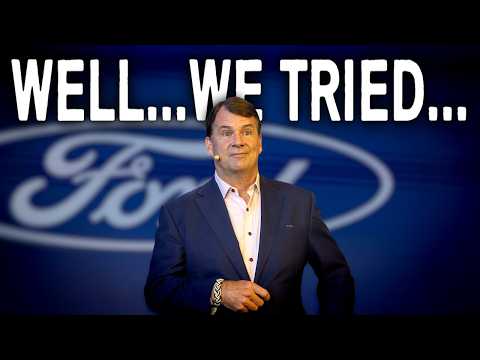
WTF Is Happening To The Car Market?

Video thumbnail: WTF Is Happening To The Car Market?
Jun 12, 202622m 53s video lengthHow Money Works

The Signal

The auto industry is undergoing a severe profit crisis despite headline sales volumes that remain resilient. While automakers are not facing a collapse in demand, they are being squeezed by a costly, failed bet on EV infrastructure, rising Chinese competition, eroding luxury brand premiums, and an affordability crisis driven by unsustainable financing terms. This isn't just cyclical; it is a structural repricing of the business as manufacturers struggle to balance legacy operations with high-interest debt and underutilized electric tech.

The Case

  • Stellantis, the major manufacturer that recently shifted from a $5.5 billion profit to a $26 billion loss, is representative of an industry-wide pivot where companies are recording massive write-downs on EV assets they no longer expect to monetize quickly.4:22
  • Automakers are facing a broader profit squeeze as performance and feature sets democratize: the Lucid Air Sapphire is one example of a vehicle matching or exceeding top-tier supercar performance for $391,000 less, putting intense pressure on traditional luxury margins.12:43
  • China's emergence as a dominant exporter is no longer a future threat, as evidenced by the 1 million vehicles exported to the EU in 2025 and the Xiaomi base model outselling the Tesla Model 3 in China.17:05
  • Consumer affordability is reaching a breaking point due to financing arithmetic rather than just sticker prices; the average monthly payment hit $773 in early 2026, with one in five buyers now locked into payments of $1,000 or more.20:03
  • The industry is masking deeper credit deterioration by extending loans to an average of over 90 months, yet subprime 60-day delinquency rates have still climbed to 6.9%, the highest level in over three decades.20:51
  • Manufacturers are not immune to high interest rates, as companies like Ford carry massive debt loads that consume up to half of their free cash flow, limiting their flexibility during market re-adjustments.22:10

The 1 Minute Signal Take

The evidence points to a genuine structural deterioration of the auto business model that goes beyond simple accounting resets or temporary demand jitters. While the speaker's claim that the sector will fully morph into a commoditized 'computer market' is purely speculative, the data on financing stress and manufacturing margin erosion is well-supported and alarming. Watch this for the concrete breakdown of how debt and interest are destroying manufacturer cash flows, but you can skip the speculative 'hot takes' on branding.

Pro Analysis

Strategic Significance

The automotive sector is undergoing a fundamental regime change. The crisis is not merely cyclical; it is a convergence of capital allocation errors, demographic shifting in luxury status, and macro-financial fragility. When an industry's sales volume remains high but profitability vanishes, it signals that the entire business model—from production to credit-based retail—is structurally impaired.

Who Should Care

  • Automotive Investors: Must distinguish between temporary accounting adjustments and long-term erosion of brand power and market share.
  • Retail Lenders: Should pay close attention to the 6.9% delinquency rate, as this is a leading indicator for systemic credit contraction.
  • Product Strategists: Need to understand that performance democratization means "faster/better" is no longer a sustainable USP for high-end brands.

Contrarian Takeaway

The current industry-wide losses may actually be an intentional "herd behavior" reset. By synchronizing their write-downs, executives gain social cover from shareholders to admit failure simultaneously, potentially masking which companies are truly operating at a fundamental disadvantage compared to their peers.

Time saved:20m 4s

Share this

Tags