
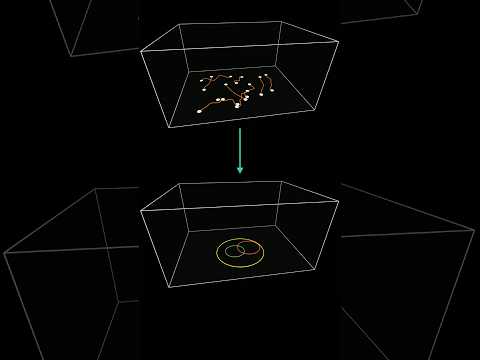
- The end condition of the experiment is guaranteed to be a collection of closed loops because all endpoints are consumed through pairing.
- Individual outcomes vary significantly, necessitating an expectation-based approach to solving for the average result.
- Future solution releases will be structured by theme and tactic to provide better context for complex problem-solving.
- Early preview access is positioned as an iterative development tool for refining solutions rather than a paywalled gimmick.
Back to Feed
Tie random ends: How many loops?
This video examines a probability puzzle involving randomly tying string endpoints together until only closed loops remain, with the goal of calculating the expected number of final loops starting from fifty strings.
Key Takeaways
- Iteratively pairing random string endpoints will eventually consume all open ends, resulting in a system consisting entirely of closed loops.
- The central intellectual challenge is to determine the expected number of loops formed when starting with fifty independent strings and performing fifty random tie operations.
- The content creator is shifting toward grouping monthly puzzle solutions into thematic long-form videos, while maintaining Patreon as a hub for early access and feedback.
Talking Points
Analysis
Strategic Significance This puzzle highlights the transition from simple random processes to structured outcomes, a core concept i...
Full analysis available on Pro.
Time saved:
Back to Feed