
Why It Matters
This content serves as a necessary reality check for the booming field of AI-assisted data science. It shifts the conversation from 'what can AI build' to 'how can we trust what it builds,' highlighting the insidious nature of silent errors in data pipelines.
Strategic Implications
Businesses integrating AI into data science workflows must institutionalize verification steps. Relying on the speed provided by large language models (LLMs) without implementing structured data-quality gates will likely lead to accumulation of 'silent errors' in downstream analytics, making them significantly harder to audit later.
Evidence & Hype Audit
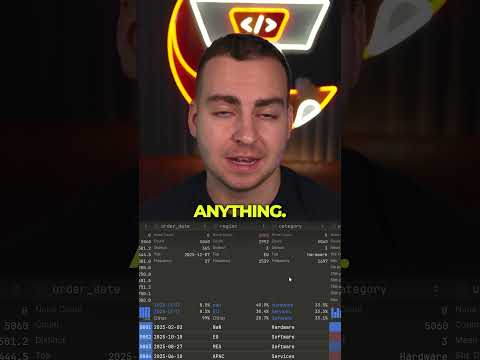
The content is high-signal, though clearly promotional for an integrated IDE (PyCharm). It lacks broad empirical studies on AI error rates, relying instead on a 'show-don't-tell' example of a common coding frustration. It is honest about the speaker's own workflow being the source of truth, rather than claiming definitive, industry-wide metrics.
Counterarguments
A contrarian might argue that forcing manual inspection at every step reintroduces the very friction that AI was meant to abolish. Advanced data-testing libraries (like Great Expectations) could automate this verification, rendering human 'squinting' at dataframe viewers less necessary.
Who Should Care
- Data Scientists: Must move beyond
head()-based sanity checks. - Engineering Leads: Should implement automated assertion-heavy test suites for all AI-assisted data pipelines.
- AI Tooling Product Managers: Should prioritize better native debugging/visualization tools to help users catch silent failures faster.
What to Do Next
- Replace
head()calls with comprehensive schema assertions in your notebooks. - Implement automated data type validation checks immediately following preprocessing scripts.
- Audit existing AI-assisted workflows for 'hidden' data type mismatches.
- Standardize on IDEs that provide deep visualization of dataframe metadata.
- Create a 'validation checklist' for any AI-assisted data transformation.