
Why It Matters
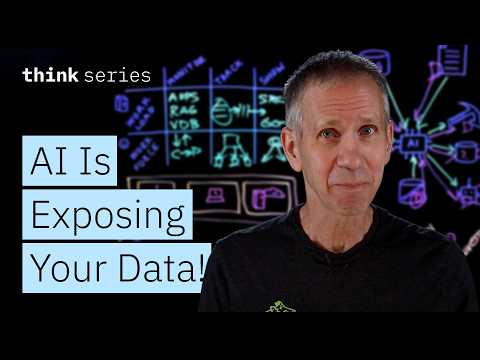
As enterprises scale their reliance on generative AI, the security perimeter is effectively dissolving. If sensitive data cannot be traced through autonomous agents and RAG systems, corporations risk severe regulatory penalties and catastrophic IP loss. This content highlights the shift from perimeter defense to data-lineage defense.
Strategic Implications
Organizations that attempt to solve this via point-solutions or siloed endpoint security will likely remain vulnerable to shadow AI. Moving to an integrated lineage model represents a fundamental change in security architecture: it requires shifting from 'what tool is being used' to 'how is data moving through the system.'
Evidence & Hype Audit
This content is clearly structured as a vendor-led argument. While the technological claims regarding the difficulty of tracing data through vector databases and agents are accurate, the video relies on alarmist, unsourced metrics like the '31% violation' figure. It treats 'public chatbot' usage as an binary danger without acknowledging potential enterprise-grade data privacy agreements.
Counterarguments
Critics might argue that a 'unified visibility platform' introduces excessive latency and administrative complexity. Furthermore, many existing endpoint-based DLP tools are rapidly adding AI-aware context, potentially closing the visibility gap without requiring an entirely new platform.
Who Should Care
- CISOs/Security Architects: Must evaluate if current DLP tools can track data transformations.
- Data Privacy Officers: Responsible for mapping AI-based data flows to compliance requirements.
- IT Managers: Need to detect and neutralize 'Shadow AI' usage before it breaches sensitive silos.
What To Do Next
- Conduct a shadow IT audit specifically targeting unauthorized AI agents and browser extensions.
- Map all data entry points into your RAG pipelines and vector databases.
- Evaluate existing DLP tools for their ability to perform cross-workload lineage tracking.
- Update incident response playbooks to include AI-specific data breach scenarios.
- Establish continuous discovery protocols for new AI tool adoption.