

- Security teams are uniquely positioned to manage AI adoption because they already possess deep institutional knowledge of handling complex, high-data environments.
- The most effective way to secure AI-driven workflows is to apply continuous, machine-scale monitoring that predicts threats rather than just reacting to known exploits.
- Cybersecurity spending should prioritize operational efficiency—such as autonomous threat investigation—over simply scaling headcount or buying more siloed tools.
Back to Feed
Source Video
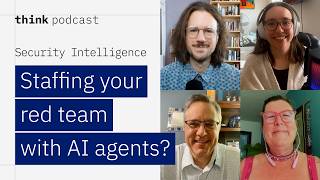
Scaling Autonomous Security Operations with AI Agents
This discussion evaluates the practical application of AI agents in penetration testing, the emerging risks of ephemeral 'vibe-coded' software, and strategies for balancing security budgets against rising ransomware threats.
Key Takeaways
- AI agents like OpenClaw can effectively conduct red teaming, but they introduce significant unintended attack surfaces that demand rigorous, human-in-the-loop oversight.
- The rise of ephemeral software generated by AI threatens to increase vulnerability debt; static security measures are insufficient to manage these transient workloads.
- Security practitioners must shift from reactive monitoring to ambient, autonomous, and predictive defense ecosystems to operate at machine scale.
Talking Points
Analysis
This conversation is strategically important as it highlights the transition from 'AI as curiosity' to 'AI as infrastructure' in security. The panel argues convincingly that static defense is dead; the complexity of AI-managed assets and ephemeral code necessitates autonomous response.
Industry leaders and CISOs should prioritize these insights because the 'speed-run' aspect of AI adoption means those who fail to integrate defensive AI will be systematically outpaced by automated adversaries.
Contrarian Takeaway: The conventional wisdom suggested by the panel is that if developers and security teams 'get comfortable' with AI, they gain a competitive edge. However, the non-obvious reality is that no matter how much humans oversee these systems, the sheer velocity of AI-generated ephemeral code will likely exceed human cognitive capacity, meaning that 'human-in-the-loop' will soon become an abstract, rather than practical, constraint.
Time saved:
Back to Feed