Scientists Are Built for Startups

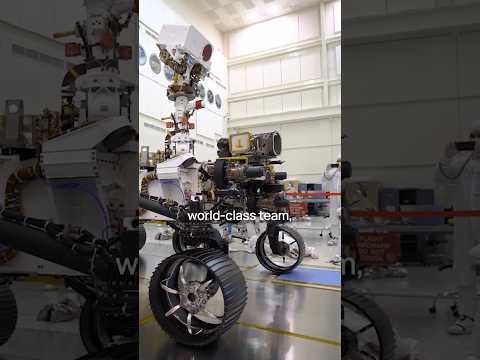
Video thumbnail: Scientists Are Built for Startups
Jul 23, 20262m 28s video lengthY Combinator

The Signal

A veteran of NASA projects—whose roles included engineering fungal building materials and working on the Mars Perseverance Rover—argues that scientific training provides a superior foundation for startup success. While NASA taught him the discipline of rigid roles and long-horizon planning, he views the high-pressure ambiguity of entrepreneurship as a necessary evolution for researchers. The piece contrasts these environments, asserting that startup founders are essentially leading a series of iterative experiments.

The Case

The NASA Model

  • NASA projects are characterized by extreme scale and long horizons, with the speaker noting that 30,000 to 100,000 contractors touched the Mars Perseverance Rover.0:30
  • These programs often span 10 to 20 years, necessitating a high degree of role specificity where team members understand their fixed responsibilities five years in advance.0:46
  • The speaker emphasizes that this highly structured, deliverable-driven culture is the near-opposite of the fluid, high-ambiguity environments found in seed-stage startups.1:16

Entrepreneurship as an Extension

  • The speaker argues that scientists are uniquely suited to lead startups because the work functions as a series of long, uncertain experiments.2:01
  • Founding a company forces researchers to adopt faster iteration cycles and adopt a detached, evidence-based approach to killing ideas that lack validation.
  • Beyond technical development, the speaker notes that a founder must satisfy the dual requirement of performing deep research while also ensuring external stakeholders actually care about the product.

The 1 Minute Signal Take

The speaker presents his shift from seeing business school as the only path for entrepreneurs to a belief that scientists make better founders as a personal realization rather than an established fact. You should treat the claim that engineering backgrounds translate well to startup success as a high-conviction perspective, noting that the author provides no external evidence to support this broader generalization.

Pro Analysis

Why It Matters

This content challenges the archetype of the 'business-savvy founder' by elevating the 'scientist-founder.' It reframes the startup journey not as a pivot away from science, but as an application of the scientific method under extreme market pressure, which has significant implications for how technical talent is recruited and developed in deep-tech sectors.

Strategic Implications

For venture capital, this suggests a strategy of hunting for founders who have survived high-process environments like NASA, as they likely possess the operational backbone to manage complexity. For aspiring founders, it demystifies the 'founder personality' by grounding it in habitual rigor rather than innate business ability.

Evidence & Hype Audit

This is largely anecdotal and falls under 'personal experience.' While the speaker provides specific background (Mars rover/fungal biology), there is no comparative data showing scientists outperform business-trained founders. The claims are highly confident (overconfident) but reflect a coherent philosophical framework.

Counterarguments

Critics might argue that scientists often struggle with the 'selling' aspect of ventures, where nuance and perfection are often at odds with the need for a 'good enough' MVP (Minimum Viable Product). Furthermore, the long-horizon thinking fostered by massive agencies might actually hinder a startup’s need to pivot rapidly in response to early market signals.

What To Do Next

  • Audit your iteration speed: Measure how long you spend on an idea before you discard it when performance data lags.
  • Define your role: If working on a team, ensure tasks are assigned with the specificity you would see in a NASA-style program.
  • Focus on the 'why': If you are a scientist-founder, explicitly dedicate time to product-market alignment, not just R&D.
  • Embrace discomfort: Treat project failure not as a waste, but as a mandatory calibration step in your founder development.

Share this

Tags

Written by: 1 Minute Signal Editorial Team