
Why It Matters
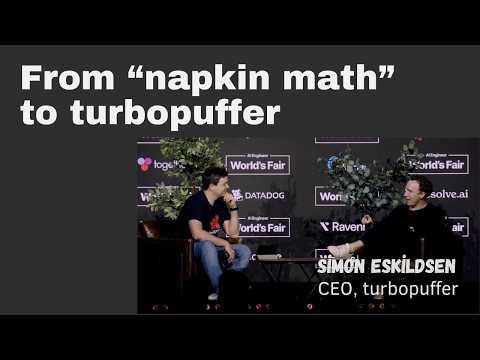
Turbopuffer represents a shift toward "resource-efficient" engineering in an AI era dominated by high-cost, GPU-centric obsession. Simon Ericson’s story illustrates how identifying an architectural mismatch—using heavy, expensive databases for vector search—can create massive competitive advantages through simple, storage-backed alternatives.
Strategic Implications
Ericson’s success signals a potential pivot point for cloud architecture. By offloading performance requirements onto CPU-dense instances and leveraging the durability of S3, companies can decouple their storage and compute bills in ways traditional, monolithic search stacks cannot allow. For leadership, this highlights that "simplicity" is not just an aesthetic; it is an economic strategy.
Evidence & Hype Audit
Ericson relies heavily on internal, anecdotal evidence, particularly the success of a single customer (Cursor). While the 95% cost reduction is a powerful claim, the generalizability of an S3-based, CPU-centric architecture to workloads far outside vector search remains anecdotal. The claims about "CPU scarcity" being driven by RL agents are plausible but provided without specific enterprise utilization data.
Counterarguments
Critics might argue that Turbopuffer’s simplicity is a byproduct of its early maturity. As product features expand and edge cases multiply, the overhead of managing manual file-based caching and complex cluster merging might negate the initial architectural gains. Complexity often emerges from requirements, not just developer preference.
Who Should Care
- CTOs/Infra Engineers: Should audit their current reliance on expensive benchmark-driven vendor choices.
- Founders: Are well-served by adopting Ericson’s disciplined, constraint-based approach to fundraising and team building.
What To Do Next
- Apply "napkin math" to your highest infrastructure costs to verify if they align with physical hardware limitations.
- Implement a proxy-based failure injection tool in your CI pipeline to test system behavior during latency or outage events.
- Re-evaluate if your storage architecture can leverage object-store durability for cost savings.
- Quantify the hidden costs of your current cloud instance types against CPU/NVMe density.
- Establish low-friction, high-agency social rituals to sustain a distributed engineering culture.