
Why It Matters
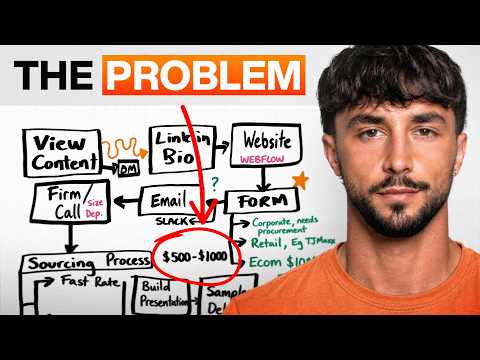
This case study illustrates the transition from 'content-led growth' to 'operational-led scale.' While many influencers struggle to fulfill the demand they generate, this agency is attempting to bridge that gap through technical automation rather than just hiring more headcount, setting a potential standard for small-to-mid-sized service firms.
Strategic Implications
By centering their AI workflow in Slack, the agency preserves its existing communication culture while supercharging output speed. This 'Agentic' approach to operations—where the AI serves as a specialized member of the team—is likely more resilient than standalone software solutions because it adapts to the team's existing habits.
Evidence & Hype Audit
This content is highly collaborative and grounded in specific operational pain points (e.g., the 3-day turnaround bottleneck). However, it remains speculative regarding the outcome; the claim that this system will be 'done in a week' or that video mockups will create a 'shock factor' lacks empirical validation. It represents expert-guided planning rather than a battle-tested case study.
Counterarguments
Critics might argue that over-automating the 'proposal phase' risks commoditizing the service. If a prospect perceives the agency as an AI-powered generator, they may undervalue the human expertise involved in selecting factories and managing product quality, which is supposedly the core value proposition.
Who Should Care
- Agency Owners: Specifically those struggling with proposal speed and fragmented project management.
- Operations Managers: Those interested in 'Slack-first' automation patterns.
- Freelancers: Scaling into agency models who need to retain a premium touch while handling higher volumes.
What To Do Next
- Conduct a 'time-leak audit' to confirm if proposal generation is indeed the primary bottleneck versus lead intake or factory communication.
- Prioritize the 'Data Clean-up' phase; verify that Notion entries are standardized before connecting them to an automated agent.
- Map out the top 3 variables that cause the most frequent pricing recalculations (e.g., shipping, units, tariffs) and codify them into a central logic layer.
- Test the 'Proactive Pitch' strategy on a small subset of incoming leads to see if conversion rates actually improve before building full-scale automation.