
Why It Matters
Clay provides a blueprint for the second generation of AI applications. While the industry spent the last two years hyper-focusing on prompt engineering and model quality, Clay highlights a market shift toward the infrastructure of execution. This is where AI moves from 'feature' to 'force multiplier' in enterprise environments.
Strategic Implications
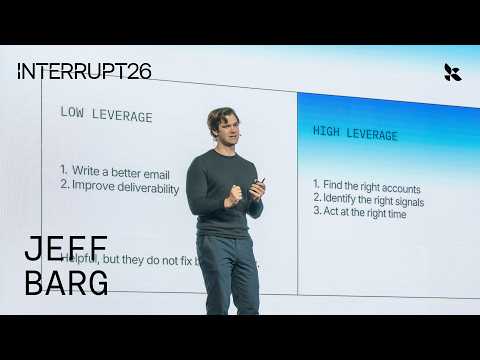
- The Death of Generic Outbound: If targeted, signal-based agents becomes the standard, standard 'spray-and-pray' email tools will see their ROI approach zero.
- Engineering vs. Marketing: The GTM department is becoming a data-engineering department. Teams that fail to align their CRM data to the requirements of agent 'memory' will be left behind.
Evidence & Hype Audit
- Trustworthy Aspects: The operational constraints described (wall-time billing, rate limits, infrastructure migration) are grounded in standard cloud-native engineering realities.
- Hype Risks: The claims of '4-10x throughput' and '70% cost savings' are internal results without third-party replication. These should be viewed as best-case scenario outcomes specific to Clay’s highly optimized workload.
Counterarguments
Critics might argue that intense data centralization (the 'Audiences' layer) creates significant privacy and data-leakage risks, especially when aggregating sensitive call recordings and internal CRM data alongside third-party AI agents.
What To Do Next
- Audit your current agent workflows for 'idle waiting' to identify potential serverless cost sinks.
- Implement a circuit-breaker or back-pressure logic for any agent that calls external APIs.
- Evaluate the current data accessibility of your CRM (Snowflake/Salesforce)—are your agents actually using this, or just hallucinations in a vacuum?
- Start measuring 'Agent ROI' by tracking conversion outcomes rather than just total email volume.