
Back to Feed
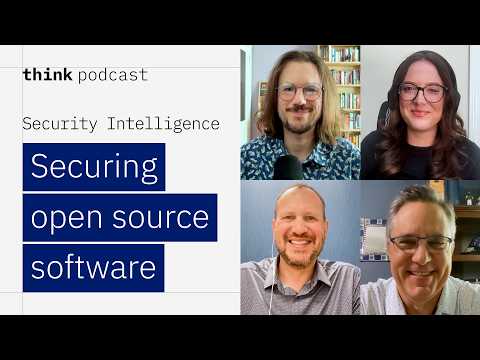
Project Lightwell brings open source security into the AI era
The Signal
IBM and Red Hat are scaling their open-source security efforts via 'Project Lightwell,' a $5 billion initiative intended to expand trusted binary productization from 15,000 core packages to roughly 1.5 million language libraries. The central tension involves whether AI-augmented security can effectively govern this massive, fragmented supply chain or if the rapid deployment of autonomous agents will outpace traditional guardrails and human review processes.
The Case
- Project Lightwell ambitiously attempts to apply Red Hat's 'trusted binary' model—previously reserved for enterprise platforms like RHEL and OpenShift—to broader ecosystems like Python, Java, and Go, aiming to mitigate the risk of chained low-severity vulnerabilities.
- Researchers at Adversa discovered 'Simjack,' an exploit where attackers trick coding agents into overwriting their own configuration files through masked symbolic links; while technically novel, panelists frame this as a form of social engineering rather than an inherent, unfixable model flaw.
- Panelists argue that current AI-security threats largely mirror familiar issues like phishing and poor process control, suggesting that implementation complexity and scale—not a lack of known security solutions—constitute the real bottleneck.
- The panel rejects the 'power-user' focus of the 2026 Layer X Security report, asserting that novice users and non-human agents act as highly vulnerable surfaces that require distinct, tailored protection strategies.
- While the initiative relies on 20,000 AI-augmented engineers to manage the projected workload, the panel remains cautious about trusting fully autonomous systems for production tasks, citing the need for multi-layered guardrails and human accountability.
- The speakers' calls for wide-scale security measures are largely asserted rather than proven, and their optimism regarding future 'steady state' security remains speculative without empirical evidence of patch throughput at the target scale.
The 1 Minute Signal Take
The video is a useful survey of the current AI-security transition, balancing corporate optimism with pragmatic technical skepticism. Watch this if you want to understand the shift from simple chatbot guardrails to the broader, more complex governance of autonomous agents; skip it if you are already familiar with the 'human-in-the-loop' consensus.
Time saved:
Tags
Back to Feed