
Why It Matters
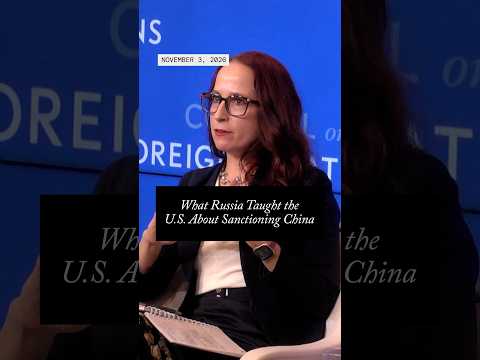
This discourse represents a fundamental shift in how the U.S. views economic warfare. It moves from seeing sanctions as a 'magic bullet' to recognizing them as a high-stakes lever that requires precise calibration based on an adversary's specific role in global capital and energy flows.
Strategic Implications
The shift toward 'surgical' sanctions implies a need for deeper intelligence and real-time financial tracking. Policymakers must map how specific entities serve as conduits for the global economy to avoid collateral damage to their own financial systems.
Evidence & Hype Audit
The content leans heavily on the speaker's personal interpretation of historical cause-and-effect. While the categorization of GSIBs is factual, the causal link between 'lighter' energy sanctions and the duration of the conflict is a subjective, albeit popular, opinion. There is no hard data presented to back the counterfactual 2008 scenario.
Counterarguments
Critics might argue that even 'light' sanctions have long-term structural impacts that take years to manifest, and that the risk of a financial crash from aggressive action against China might be overstated by those who fear the domestic consequences of a decoupling.
Who Should Care
- Financial Analysts: To assess the risk of systemic contagion from geopolitical events.
- Policy Wonks: For insight into the changing doctrine of 'creative' economic warfare.
- Investors: To understand the potential for sudden, targeted disruptions in global supply and financial rails.
What To Do Next
- Monitor statements from central banks regarding cross-border financial exposure.
- Track the development of alternative payment infrastructures that bypass traditional GSIB networks.
- Analyze the specific 'essential infrastructure' sectors that governments identify as high-leverage targets.
- Diversify portfolios against the risk of rapid, politically-driven financial decoupling.