
Why It Matters
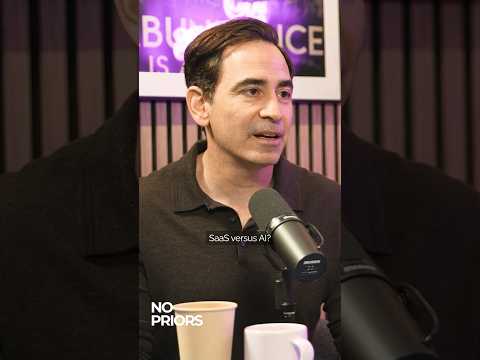
This discourse represents a maturation of the AI-in-enterprise hype cycle. By distinguishing between 'systems of record' (which are inherently sticky) and 'point solutions' (which are often commoditized), the argument provides a framework for companies to stop panicking about wholesale disruption and start identifying actual operational efficiency gains.
Strategic Implications
For decision-makers, this shifts the goal from 'how do we replace everything with AI?' to 'how do we consolidate our stack?' The strategic winner will be the platform that captures multiple peripheral point-solution functions into one core interface.
Evidence & Hype Audit
This content is anecdotal and carries a strong survival bias, as the speaker is associated with a product (Serville) that is actively competing in the replacement market. It lacks independent data or long-term longitudinal studies, though its core economic claim—that maintenance is more expensive than acquisition—is a recognized principle in software engineering.
Counterarguments
One could argue that if AI becomes sufficiently autonomous, the 'maintenance cost' mentioned will drop near zero, potentially making even core systems of record replaceable. The current argument assumes a static cost structure for maintenance that may not hold over the next five years.
Who Should Care
- CTOs and CIOs: Focused on stack reduction and vendor management.
- SaaS Founders: Assessing the vulnerability of their product category to consolidation.
- Enterprise Procurement: Identifying which line items are 'essential' versus 'redundant.'
What To Do Next
- Inventory the full SaaS portfolio.
- Categorize each tool by its criticality to the business.
- Calculate the TCO (Total Cost of Ownership) beyond just the subscription fee.
- Look for opportunities to consolidate fragmented toolsets into existing core platforms.
- Pause any custom-build projects that do not provide a unique competitive advantage.