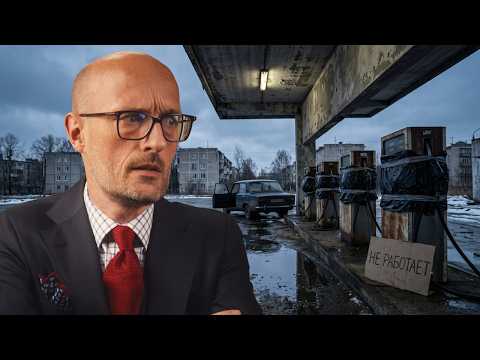
Is Russia Actually Losing?

Video thumbnail: Is Russia Actually Losing?
Jul 11, 202635m 28s video lengthPatrick Boyle

The Signal

Russia’s war economy is facing structural exhaustion, marked by severe domestic fuel shortages, a collapsed fiscal cushion, and a pivot to China that functions more as forced dependency than strategic alliance. The war has moved from the battlefield into Russian infrastructure, forcing the Kremlin to triage air defenses to protect political centers and refineries.

The Case

Fuel and Infrastructure Strain

  • Russia has enacted an immediate ban on diesel exports running through July 31, 2026, and is now importing refined fuel—including emergency gasoline from India—to mitigate domestic scarcity.0:23
  • Drone attacks have forced Russian authorities to declare an indefinite state of emergency in Crimea, where officials have halted civilian petrol sales and disabled mobile networks to blunt drone targeting, which routinely cripples local commerce.3:59
  • Air defenses are being rationed: Pantsir missile systems were documented being lowered by helicopter onto Moscow apartment roofs as the military chooses to defend key refineries and the capital over less visible regions.5:29

Economic and Strategic Reality

  • Russia’s financial position is deteriorating rapidly: in the first quarter of 2026 alone, the budget deficit reached 4.6 trillion rubles, already exceeding the annual target of 3.8 trillion.16:28
  • China has cemented its status as a critical leverage-holder, with its share of Russian foreign trade jumping to 35% from 16% prewar as it replaces Western equipment and serves as a conduit for sanctioned dual-use technology.19:47
  • Europe is accelerating a massive rearmament program—with Germany planning to borrow over 800 billion euros by 2030—driven by a growing distrust of the U.S. as a transactional ally and the potential for domestic "kill switches" in American-made systems.23:25

Security and Trust

  • Ukraine’s skepticism toward peace negotiations is rooted in the history of repeated Russian treaty violations, including the 1994 Budapest Memorandum and the broken agreements leading to the 2014 and 2022 invasions.31:18
  • Ukraine is increasingly adopting an asymmetric "porcupine defense," demonstrated by domestically produced Flamingo cruise missiles that cost roughly half a million dollars—one-fifth the price of a U.S. Tomahawk—while carrying double the range.26:56

The 1 Minute Signal Take

Russia is no longer an independent empire but a state increasingly subsidizing its war effort through the depletion of long-term reserves and strategic subservience to China. The conflict has paradoxically accelerated Europe’s pursuit of military autarky and forced Russia into a cycle of visible domestic sacrifice that the Kremlin’s public messaging can no longer fully conceal.

Pro Analysis

Why It Matters

This analysis highlights the disconnect between the perception of a static grind and the reality of a state running on fi...

Full analysis always available on Pro.

Time saved:33m 19s

Share this

Tags