The Risky Strategy That Led to Big Losses at Situational Awareness

Video thumbnail: The Risky Strategy That Led to Big Losses at Situational Awareness
Aug 15, 20262m 2s video lengthThe Wall Street Journal

The Signal

A fund named Situational Awareness recently suffered a rapid collapse after an initial period of high returns. Its strategy centered on betting that AI-driven economic transformation would create distinct market winners. The episode highlights how the fund combined excessive leverage, concentration, and illiquid holdings, exacerbated by a high-risk tactic known as the 'Texas hedge.'

The Case

Investment Strategy and Risk

  • The fund operated on the macro thesis that AI diffusion would reshape the economy, leading the firm to go long on specific AI-advantaged stocks.0:19
  • The narrative frames the fund's failure as a predictable blow-up driven by the combination of three classic vulnerabilities: heavy concentration, significant leverage, and the inclusion of illiquid securities.1:37
  • While the fund initially saw gains that made its manager appear as a genius, these qualitative successes were followed by a rapid, unquantified loss of capital.

The 'Texas Hedge'

  • The episode attributes part of the losses to the 'Texas hedge,' a term purportedly originating from cattlemen that functions as a dangerous misnomer in financial contexts.
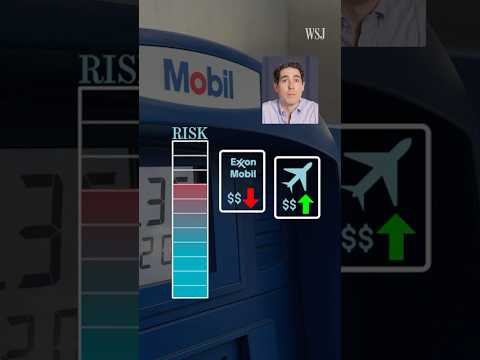
  • Unlike a standard hedge designed to reduce exposure, the Texas hedge is a strategy that inadvertently increases exposure by doubling down on a direction.0:38
  • The strategy is illustrated by the counterintuitive logic of a cattle owner who takes market positions that benefit if cattle prices rise, effectively ensuring they gain more if the market moves in their favor but lose more if it does not.1:08

The 1 Minute Signal Take

The fund’s collapse serves as a reminder that a directionally correct macro thesis—like the transformative potential of AI—is insufficient if implemented through a high-risk structure. Investors should view the 'Texas hedge' as a warning sign of an amateurish or overly aggressive risk-management framework, rather than a legitimate protective measure.

Pro Analysis

Why It Matters

This case highlights the danger of 'thematic investing' combined with aggressive financial engineering. When a fund becomes a true believer in a technological narrative, it often ignores basic mechanical risks like leverage and liquidity, leading to sudden, catastrophic failure.

Strategic Implications

Investors often conflate 'high-conviction' with 'high-risk.' The fund's reliance on a Texas hedge suggests a psychological trap: believing that because one is 'smart' about a macro trend (AI adoption), one can afford to use unconventional or dangerous hedging tools. This effectively turns a speculative investment into a binary gamble.

Evidence & Hype Audit

The transcript provides a strong conceptual framework but lacks empirical rigor. It relies on anecdotal evidence about the fund’s strategy rather than audited performance data. It is a high-quality educational narrative but should be treated as a theoretical warning rather than a forensic audit.

Counterarguments

One could argue that the fund's strategy was not inherently flawed, but rather suffered from poor timing or exogenous shocks. If the AI thesis is correct, a leveraged bet could have produced outsized returns; the 'Texas hedge' might simply have been a misunderstood attempt at maximizing alpha in a high-growth sector.

Who Should Care

  • Portfolio Managers: To audit for hidden exposure masquerading as hedges.
  • Retail Investors: To recognize the risks of leverage and concentration in thematic AI funds.
  • Risk Officers: To identify when 'hedging' terminology is being used to disguise increased risk.

What To Do Next

  • Review current portfolios for 'hidden leverage' disguised as sophisticated strategy.
  • Assess the liquidity of individual positions versus the volatility of the overall sector.
  • Question the 'hedge' label: Does this position reduce my downside or double my exposure?
  • Set strict limits on leverage for concentrated thematic bets.
  • Stress-test the exit strategy for illiquid assets during a market panic.

Share this

Tags

Written by: 1 Minute Signal Editorial Team